







Shipping and Handling Charges: A Fulfillment Cost Structure Breakdown
Unpredictable fulfillment costs can quickly eat into your profit margins. Many growing ecommerce brands struggle to understand what they’re actually paying for when they see shipping and handling charges on their invoices. This confusion often leads to overpaying or choosing the wrong fulfillment partner.
This article breaks down each cost component so you can make smarter decisions about your fulfillment spending. You’ll learn exactly what goes into shipping and handling fees, how to calculate your true costs using a shipping costs calculator, and proven ways to reduce your expenses. Once you know what to look for, you can take control of this major business expense.
Key Takeaways
- Shipping covers carrier fees to move packages, and handling covers everything before the package reaches the carrier including storage, pick and pack labor, and packaging materials.
- Your cost per order is the best metric for comparing fulfillment options, calculated by dividing total shipping, handling, and storage costs by your number of orders.
- Partnering with a 3PL can reduce your shipping and handling charges by 20-40% through volume discounts, packaging optimization, and automatic rate shopping across carriers.
What Shipping and Handling Charges Include
Shipping and handling charges cover two distinct sets of costs that most providers bundle together on your invoice. Shipping refers to what carriers like USPS, UPS, FedEx, and DHL charge to move your packages. Handling covers everything that happens before a package reaches the carrier. Knowing the difference helps you spot where your money goes and where you can save.
Shipping Costs
Carriers set base rates based on package weight, dimensions, distance (measured in zones), and delivery speed. They charge either actual weight or dimensional weight, whichever is higher. Dimensional weight uses a formula: length times width times height, divided by a carrier-specific number. This means lightweight but bulky items cost more to ship than you might expect.
Surcharges add to your base shipping rates throughout the year. Fuel surcharges change monthly based on gas prices. Residential delivery fees apply when packages go to homes instead of businesses. Peak season surcharges hit during the holiday months from November through January. Remote area fees apply to hard-to-reach locations. For larger B2B orders or pallet shipments, cargo shipping costs follow different rate structures than small parcel shipping.
Handling Costs
Handling costs cover the work your fulfillment partner does before shipping. This includes receiving your inventory from suppliers and checking it for damage. Storage fees apply based on whether your products sit in small bins, standard bins, XL bins, or on pallets.
Pick and pack labor covers the time workers spend finding items, pulling the right quantities, and packing orders correctly. Packaging materials like boxes, mailers, bubble wrap, and tape add to handling fees. Quality checks before sealing each package round out the handling process.
Why Providers Bundle These Costs
Most fulfillment providers combine shipping and handling into a single line item. This creates confusion about what you’re paying for. Providers with transparent pricing separate these costs so you can see exactly where your money goes. This visibility helps you identify the best opportunities to cut expenses.
How to Calculate Your Shipping and Handling Costs
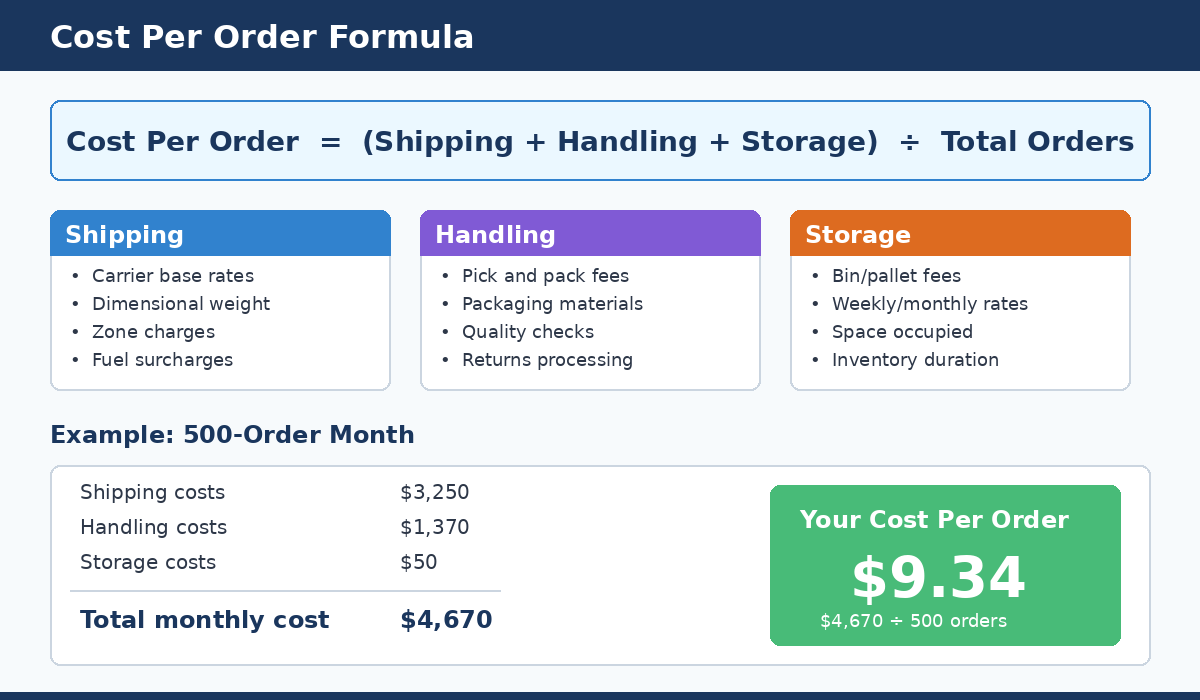
Your cost per order is the single most useful number for comparing fulfillment options. The formula is simple: add up your shipping, handling, and storage costs, then divide by your total number of orders. This gives you a clear benchmark you can track over time and use when evaluating different fulfillment partners.
Using a Shipping Costs Calculator
A shipping costs calculator from carrier websites helps you estimate the shipping portion. UPS, FedEx, and USPS all offer free online calculators. Enter your origin ZIP code, destination ZIP code, package weight, and dimensions. The calculator shows rates across different service levels so you can compare options.
A shipping expenses calculator gives you carrier costs, but remember to add handling fees for the full picture. Most calculators don’t include monthly surcharges, so factor those in separately.
Sample Monthly Calculation
Here’s what a typical 500-order month might look like for a growing brand:
| Cost Category | Calculation | Monthly Cost |
| Pick fees | 500 orders × $2.50 | $1,250 |
| Additional item picks | 300 items × $0.40 | $120 |
| Storage | 10 bins × $1.25 × 4 weeks | $50 |
| Shipping | 500 orders × $6.50 average | $3,250 |
| Total | $4,670 | |
| Cost per order | $4,670 ÷ 500 | $9.34 |
Costs Often Missed
Several costs get overlooked when brands calculate their true fulfillment costs. Returns processing affects 5-10% of orders depending on your product type. Peak season surcharges from November through January can add 10-15% to shipping costs. Some providers charge monthly minimums or onboarding fees. IWS charges no onboarding fees, which saves new clients money from day one.
International Shipping Costs Explained
International shipping rates run significantly higher than domestic rates. Carriers like USPS International, UPS Worldwide, FedEx International, and DHL Express each offer different pricing and transit times. Express services deliver in about 5 days, and economy options can take 4 weeks or longer. International shipping costs depend on destination country groupings rather than simple zone-based pricing.
Additional Costs for International Orders
International orders come with extra costs beyond the carrier rate:
- Customs duties and import taxes (usually paid by recipient)
- Commercial invoices and customs documentation
- Higher dimensional weight sensitivity
- Cargo shipping costs for bulk shipments priced separately from small parcels
When International Fulfillment Makes Sense
International fulfillment makes sense when 10% or more of your orders ship to a specific country or region. Lightweight products that ship economically work best for cross-border sales. High-volume international markets may justify using fulfillment centers in those countries to reduce international shipping rates.
IWS ships international orders from our U.S. warehouse to destinations worldwide. We prepare all customs documentation and rate shop across carriers to find the best international shipping rates for each package. Tracking stays active through final delivery.
Ways to Reduce Your Shipping and Handling Charges
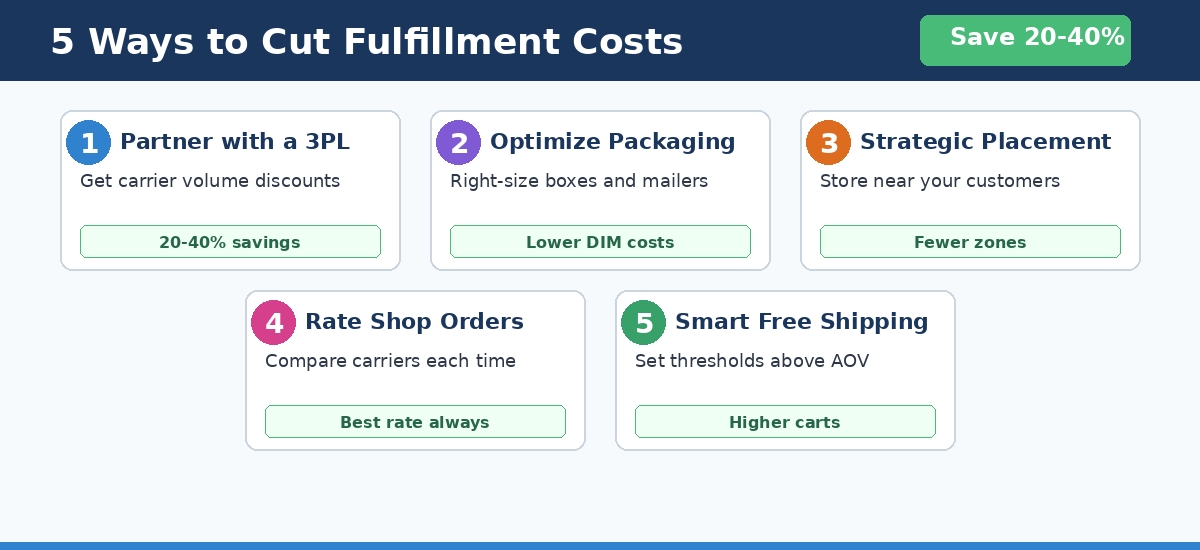
Cutting your shipping and handling charges doesn’t require sacrificing service quality. The right strategies can save you 20-40% on fulfillment costs.
Partner with a 3PL for Volume Discounts
3PLs ship thousands of packages every day, which earns them significantly lower carrier rates. These savings typically run 20-40% compared to retail rates. IWS passes negotiated shipping rates directly to clients with no markup.
Optimize Your Packaging
Right-sizing your boxes reduces dimensional weight charges on every order. Poly mailers work better than boxes for soft goods and cost less to ship. Your fulfillment partner can audit your current packaging and recommend changes that save money immediately.
Place Inventory Strategically
East Coast fulfillment reaches more than half the U.S. population in zones 1 through 4. Fewer zones mean lower costs and faster delivery times. IWS operates from Farmingdale, NY, providing strong coverage for East Coast and Midwest customers.
Rate Shop Every Shipment
Different carriers offer better rates depending on package size, weight, and destination. Defaulting to one carrier for all orders leaves money on the table. IWS software automatically compares USPS, UPS, and FedEx rates for each shipment and selects the best option.
Set Smart Free Shipping Thresholds
Free shipping increases conversions, but you need to protect your margins. Set your threshold slightly above your current average order to encourage customers to add more items. Absorb shipping costs on high-margin products where you can afford it. Pass costs through on heavy or low-margin items where free shipping would hurt your bottom line.
Shipping and Handling Charges FAQs
What is the average shipping and handling cost per order?
Most ecommerce businesses pay between $8 and $12 per order for combined shipping and handling. Your actual cost depends on package weight, dimensions, shipping distance, and your fulfillment partner’s fee structure.
Should I show shipping and handling as separate charges to customers?
Combining them into one line item keeps checkout simple and reduces cart abandonment. Separating them can build trust with price-conscious customers who want to see exactly what they’re paying for.
Are shipping and handling charges taxable?
Tax rules vary by state and product type. Some states tax shipping charges, others don’t, and handling fees often follow different rules than shipping. Check with a tax professional for your specific situation.
How often do carrier shipping rates change?
Major carriers like UPS, FedEx, and USPS adjust their base rates annually, typically in January. Fuel surcharges change monthly, and peak season surcharges apply during the holiday shipping period from November through January.
