

Fulfillment solutions


Cargo vs Shipment: Key Differences & Practical Examples Explained
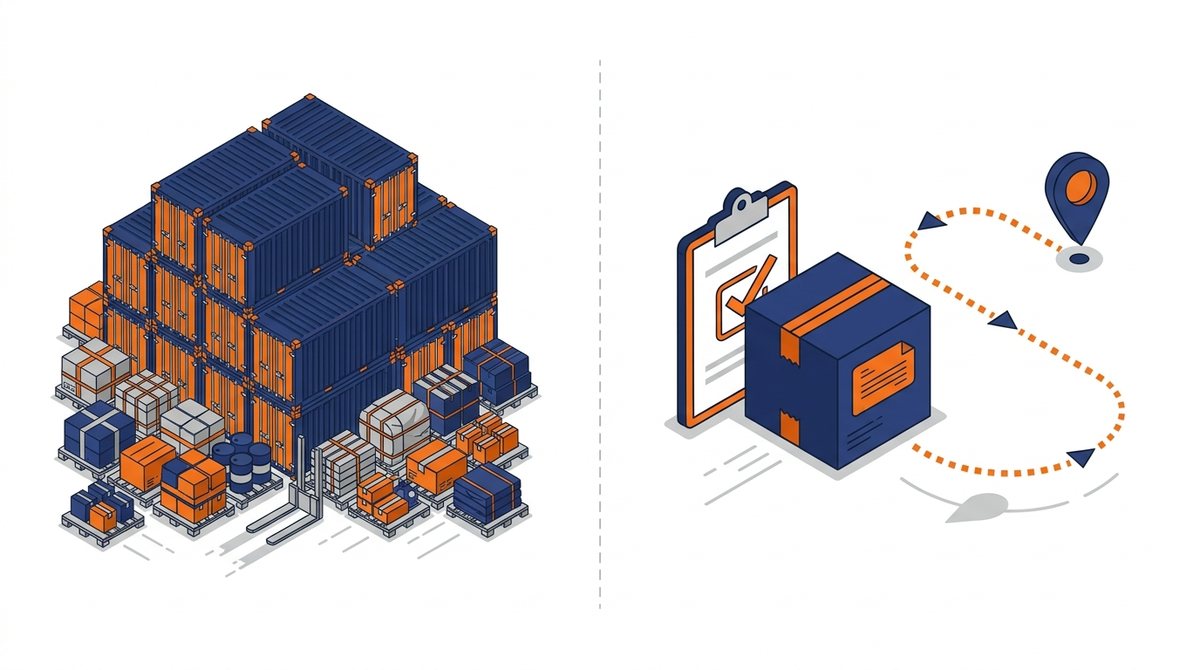
Cargo is the goods themselves, while a shipment is one batch of goods moving under a single order or tracking number. It affects how you communicate with partners, plan your supply chain, and manage your documentation.
Both terms relate to goods being moved but serve different purposes in the logistics world. Understanding the cargo vs shipment distinction helps you speak the language of logistics professionals and make better decisions about your business’s transport needs.
What Is a Shipment?
A shipment is one batch of goods moved together from a single origin to a single destination under one order or bill of lading. It is the discrete, trackable unit of a delivery: when you book freight or send a parcel, that one consignment is the shipment.
Put simply, a shipment answers “which goods, moving together, on this order.” One purchase order might ship as a single shipment or split into several, and each shipment gets its own paperwork, tracking, and delivery timeline. This is the level at which carriers quote rates and at which you track delivery times across carriers.
What Is Cargo?
Cargo is the physical goods being transported, whether they move by ship, plane, train or truck, and whether they fill a container or a pallet. The term usually describes goods carried in bulk by ship, plane, train, or truck. Where a shipment is the transaction, cargo is the stuff itself.
Cargo shipping (or cargo shipment) is the commercial transport of those goods, typically in bulk over long distances by sea, air, or rail. A single ocean vessel can move cargo for thousands of separate shipments at once, which is why the two words are often confused: the cargo is what fills the container, and the shipment is your specific booking inside it.
How Do Cargo and Shipment Differ in Practice?
From documentation to planning, knowing when to use “cargo” versus “shipment” impacts your whole logistics operation.
Key Differences
The table below highlights the essential distinctions between cargo, shipment, freight, and shipping:
| Term | What it refers to | Goods or process | Typical scale | Everyday example |
|---|---|---|---|---|
| Cargo | The physical goods in transit | The goods | Bulk | The pallets of product filling a container |
| Shipment | One batch of goods moving under a single order or document | A discrete unit (both goods and booking) | Any size, one consignment | The 12 pallets you booked on one bill of lading |
| Freight | Bulk goods moved commercially, also the transport service and the fee to move them | Both | Bulk, commercial | An LTL freight load of 6 pallets |
| Shipping | The overall act or process of moving goods | The process | Any | Your store shipping an order to a customer |
These distinctions matter significantly when communicating with logistics partners, filing insurance claims, or preparing customs documentation.
Why It Matters
Using the right terminology ensures clear communication with logistics partners, carriers, and customs officials. Confusion about whether you’re talking about the physical goods (cargo) or the transport unit and process (shipment) can lead to errors in documentation, insurance gaps, or compliance issues.
For businesses using fulfillment services, this affects how you communicate your needs and understand the services provided. When a logistics provider talks about handling your cargo, they’re referring to the physical management of your goods. When they mention processing your shipments, they’re talking about moving your goods from origin to destination.
Freight vs Shipment vs Cargo: What’s the Difference?
Cargo is the goods, freight is the goods plus the charge for moving them, and shipping is the process that moves them. Here is the clean distinction:
- Cargo is the goods. It is what physically sits in the truck, container, or plane.
- Freight is both the bulk goods moved commercially and the service (and fee) of moving them. “Freight” implies scale and a commercial carrier.
- Shipment is one specific consignment: a defined set of goods moving under a single order, tracked from origin to destination.
So a freight carrier moves cargo, and your particular booking of that cargo is a shipment. If you are comparing service types, our guides to shipping and transportation and flat-rate pallet shipping go deeper on how freight actually moves.
Modes of Transport for Cargo
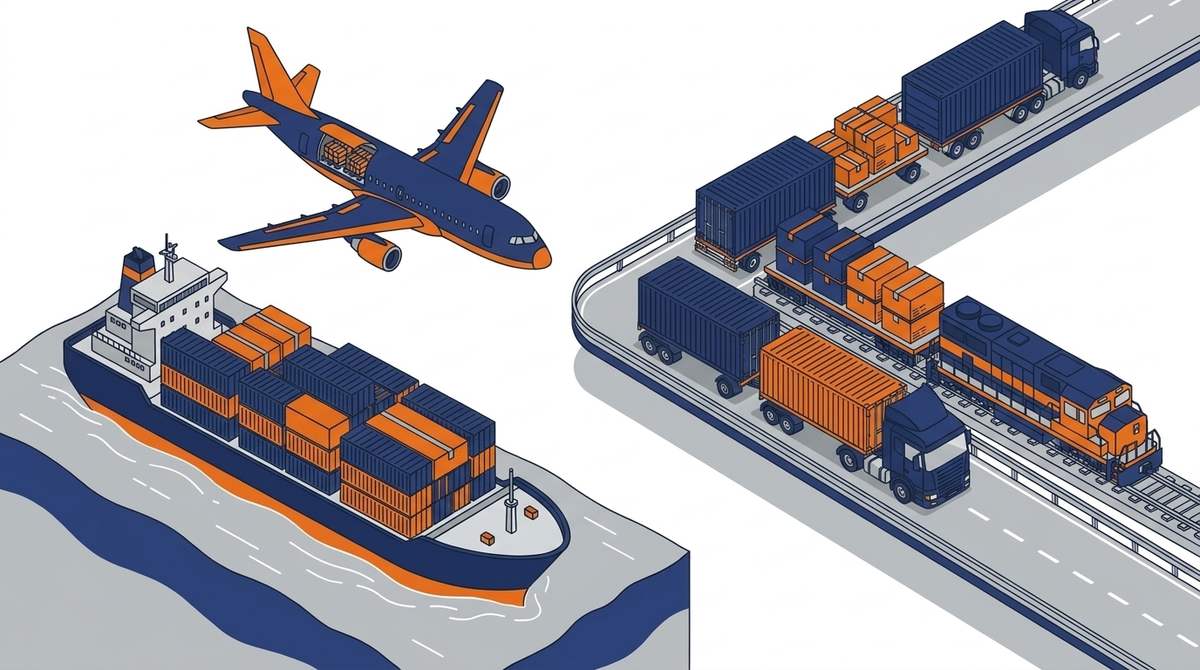
Cargo moves by ship, plane, truck or train. Ships carry about 90% of world trade by volume, and air is the fastest and the most expensive.
Cargo Ships
Maritime transport is the backbone of global trade, moving around 90% of the world’s cargo by volume. Cargo ships are the most efficient for bulk and non-time-sensitive goods. These vessels, especially container ships, can move massive amounts of cargo across oceans at relatively low cost per unit.
The efficiency of maritime cargo transport comes from economies of scale. A single large container ship can carry over 20,000 TEU (twenty-foot equivalent units). This capacity makes sea transport the most cost-effective option for international trade, especially for heavy or bulky items where air freight would be too expensive.
Cargo Planes
When speed is more important than cost, air cargo is the fastest option. Air transport is ideal for high-value, time-sensitive, or perishable cargo that justifies the premium cost. Electronics, pharmaceuticals, fashion items, and emergency supplies often travel as air cargo.
For businesses with urgent delivery needs, specialized NDA shipping services provide guaranteed next-day delivery, further reducing transit times for critical items while maintaining careful handling standards throughout the logistics process.
While more expensive than sea transport, air cargo has its advantages: dramatically reduced transit times, higher security, and access to regions without seaports. For businesses where time-to-market is critical, the speed of air cargo can offset its higher cost through reduced inventory holding and faster cash conversion cycles.
Freight Trucks and Trains
Land-based cargo transport through trucks and trains is the middle mile in most supply chains. Trucks offer flexibility and direct point-to-point delivery, while trains excel at moving large cargo volumes over long distances.
Intermodal transport, combining multiple modes such as truck to rail or truck to ship, optimizes the whole cargo journey. This allows businesses to leverage the strengths of each transport mode, creating more resilient and cost-effective supply chains. For example, cargo might travel by sea across oceans, then transfer to trains for long-distance land transport and finally complete the final delivery by truck.
Types of Shipments
Shipments are booked as full truckload or container (FTL/FCL), or as less-than-truckload or container (LTL/LCL), where several shippers share the space.
Full-Truckload or Full-Container Load (FTL/FCL)
FTL/FCL shipments involve booking an entire truck or container for your goods. This is ideal when shipping volumes that can fill or nearly fill a container or truck. The main benefits include reduced handling of goods, lower risk of damage and usually faster transit times as the vehicle goes directly to the destination without multiple stops.
From a cost perspective, FTL/FCL shipments often have better per-unit shipping rates when shipping large volumes. Additionally, these shipments minimize the risk of cross-contamination or mixing with other shippers’ goods. For businesses with consistent high-volume shipping needs, setting up regular FTL/FCL shipments means predictable logistics costs and timelines.
Less-than-Truckload or Less-than-Container Load (LTL/LCL)
LTL/LCL shipments allow businesses to move smaller quantities of goods without paying for unused space. With this approach, multiple shippers share the cost of a single container or truck, each paying only for the space their cargo occupies. This makes sense for businesses with smaller shipping volumes or irregular shipping schedules.
While LTL/LCL shipments are usually more expensive per cubic foot than full loads, they eliminate the need to wait until you have enough goods to fill an entire container. For small to mid-sized businesses, this means you can ship products as needed rather than based on container capacity. This approach works particularly well when combined with effective small parcel fulfillment strategies for your direct-to-consumer orders.
Innovative Warehouse Solutions specializes in optimizing LTL/LCL shipments for growing businesses, helping them balance cost efficiency with delivery time.
Choosing the Right Logistics Partner
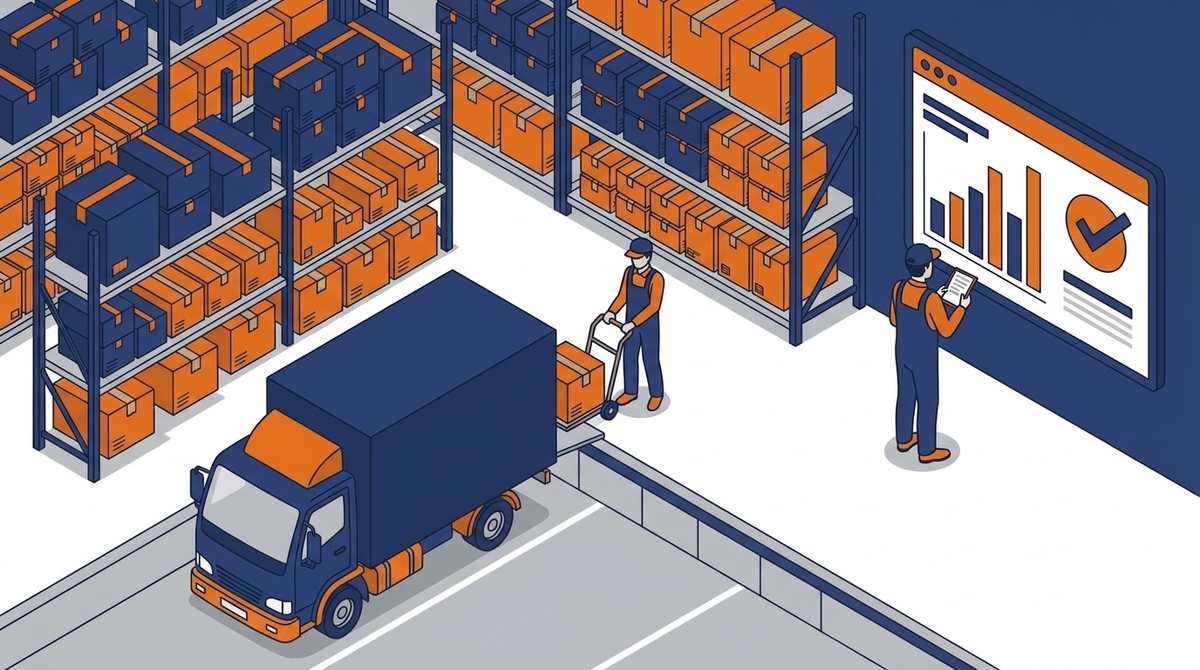
A 3PL handles receiving, storage, pick and pack, and carrier selection for your shipments. IWS does this from Farmingdale, New York, at 99.98% order accuracy. The difference between logistical headaches and smooth operations often comes down to choosing the right partner for your cargo and shipment needs.
Importance of a Reliable Partner
A strategic logistics partner does more than just move cargo from A to B. They become an extension of your business. The right partner has expertise in navigating complex shipping regulations, optimizing transport routes, and managing documentation properly. This expertise directly impacts your bottom line through reduced shipping costs, fewer delays, and higher customer satisfaction.
When evaluating potential logistics partners, look beyond basic pricing to assess their on-time delivery record, communication transparency, technology capabilities, and problem-solving skills. The most valuable logistics relationships are built on consistent performance and proactive communication, especially when things go wrong.
Modern businesses often sell through multiple channels simultaneously, from e-commerce websites to marketplaces and physical retail locations. In these cases, partnering with providers offering omnichannel 3PL services becomes essential for maintaining consistent inventory records and fulfillment standards across all sales channels. This integrated approach ensures that cargo handling and shipment processes remain synchronized regardless of where customer orders originate.
Innovative Warehouse Solutions Advantage
Innovative Warehouse Solutions offers a customer-centric approach that sets us apart in the 3PL industry for businesses looking to optimize their cargo management and shipment processes. Unlike big impersonal logistics providers, IWS focuses on creating tailored solutions for small to mid-sized businesses shipping at least 300 orders a month.
The IWS advantage is in combining technology with customer service. Their warehouse management system has real-time visibility into inventory and shipments and their transparent pricing model eliminates the hidden fees common in logistics services. This technology and transparency allow businesses to make data-driven decisions and have predictable operational costs.
Shipment vs Cargo FAQs
What is the difference between cargo and freight shipping?
Cargo refers to goods transported via air, sea, or land, typically in bulk. Freight shipping specifically refers to commercial transportation of goods, usually by trucks, trains, ships, or planes. Cargo is a broader term, while freight shipping is a method of transporting cargo.
What is the difference between shipment and transportation?
Shipment refers to a specific set of goods being transported, while transportation is the overall process of moving goods from one place to another. Shipment is a unit of transported goods, whereas transportation includes vehicles, routes, and logistics.
What are the three types of cargo?
The three main types of cargo are general cargo, bulk cargo, and liquid cargo. General cargo includes packaged goods like electronics. Bulk cargo consists of unpackaged goods like coal or grain. Liquid cargo includes fluids like oil or chemicals.
What is cargo in shipping terms?
In shipping, cargo refers to goods or merchandise transported by air, sea, or land. It includes containerized, bulk, and breakbulk shipments but typically excludes passenger luggage.
What is the legal definition of shipment?
Legally, a shipment is a batch of goods transported under a single bill of lading or contract. It represents one delivery of goods from a seller to a buyer through an agreed transportation method.
What is a shipment in simple terms?
A shipment is one specific batch of goods sent together from one place to another under a single order or tracking number. It is the unit you book, track, and receive.
Is a shipment the same as cargo?
No. Cargo is the physical goods being moved. A shipment is the specific consignment of those goods traveling under one order or document. The cargo is what moves, and the shipment is your booking of it.
What is a cargo shipment?
A cargo shipment is one consignment of goods moving under a single document. “Cargo” names the goods, “shipment” names the consignment.
What is cargo in shipping?
In shipping, cargo is the goods carried by a vessel, aircraft, truck or train, excluding passenger luggage and the vehicle’s own stores.
Summary
Understanding the difference between cargo and shipment goes beyond semantics. It shapes how you structure your entire logistics operation. Cargo is the physical goods themselves, and a shipment is a specific batch of those goods moving under one order or document. This distinction matters for everything from insurance coverage to customs documentation.
As you develop your logistics strategy, choosing the right modes of transport and shipment types makes a big difference in cost and customer satisfaction. Whether you’re shipping full containers across the ocean or managing less-than-truckload shipments domestically, working with an experienced logistics provider helps you navigate the complexities of modern supply chains.
Looking to optimize your cargo management and shipment processes? Contact Innovative Warehouse Solutions for a consultation. We’re customer-focused and transparent in our pricing.
About the Author
Innovative Warehouse Solutions (IWS) is a U.S.-based third-party logistics (3PL) and order fulfillment provider. We help ecommerce and B2B brands with warehousing, pick and pack, kitting and assembly, and small parcel shipping. This article was written by the IWS operations team, drawing on hands-on experience running fulfillment for growing brands.