

Fulfillment solutions


Dimensional Weight Calculator (DIM): UPS, FedEx & USPS
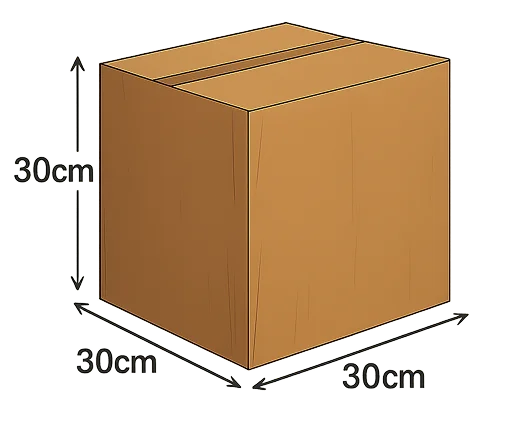






What Is Dimensional Weight?
Dimensional weight prices a parcel on the space it fills: length x width x height in inches, divided by 139. Carriers bill that or the actual weight, whichever is higher. The full breakdown, including why carriers price this way, is further down this page.
How Do You Calculate Dimensional Weight?
Multiply length, width and height in inches, then divide by 139 to get dimensional weight in pounds. A 20 x 16 x 12 in box is 3,840 cubic inches, which bills as 28 lb even if it weighs 10 lb.
Why Does Dimensional Weight Raise Your Costs?
An oversized box bills on the air inside it, so right-sizing the carton cuts the invoice directly. Dropping that 20 x 16 x 12 in box to 18 x 14 x 10 in takes billable weight from 28 lb to 19 lb, before shipping and handling charges are added.
Why Do Carriers Use Dimensional Weight?
Carriers bill dimensional weight because trucks and planes run out of space before they run out of payload. A big, light box takes up room that could carry denser freight, so carriers price the space, not just the pounds.
Picture two 20 lb packages on the same truck. One holds a toaster oven in a 16 x 10 x 10 in box: 1,600 cubic inches, which is a DIM weight of 12 lb, so it bills at its actual 20 lb. The other holds a plastic chair in a 26 x 18 x 18 in box: 8,424 cubic inches, a DIM weight of 61 lb, so it bills at 61 lb. Same scale weight, three times the invoice, because the chair's box occupies five times the truck.
Before DIM pricing, shippers of bulky, light products rode cheap and carriers absorbed the space cost. Every major carrier now charges whichever is higher, actual or dimensional weight, which keeps each cubic foot of a trailer earning roughly the same revenue.
How Carriers Calculate DIM Weight
Every carrier uses the same basic formula: multiply your package length, width, and height to get its cubic size, then divide by that carrier's DIM factor. Whichever is higher, the dimensional weight or the actual weight, is what you get billed for.
DIM weight = (Length × Width × Height) ÷ DIM factor
| Carrier | Domestic DIM factor (in³/lb) |
| UPS | 139 |
| FedEx | 139 |
| USPS (over 1 cubic foot) | 139 |
All three carriers now divide by 139, so 3,840 / 139 = 28 lb of dimensional weight on a box that actually weighs 10 lb. Right-size it to 18 × 14 × 10 in (2,520 in³) and the DIM weight drops to about 18 lb. Our calculator runs this math for UPS, FedEx, and USPS at once so you can compare carriers and pick the cheapest.
Packaging Tips to Reduce DIM Weight Charges
Smart packaging saves money. Use the smallest box that fits your items safely. Remove extra space with proper padding instead of bigger boxes. Consider flat rate options for heavy but small items. Break large orders into smaller packages when it makes sense. Our team at IWS can help you create the most cost-effective packaging strategy.
Two habits from our warehouse floor are worth copying. IWS stocks more than 40 box and bag sizes so every order ships in the closest-fitting carton, and tight cartons do double duty: less billable air and fewer transit damages. And before you finalize packaging on a new product, calculate its DIM weight; asking your factory to trim even half an inch from one or two sides of the box lowers the billable weight of every unit you will ever ship.
How IWS Can Help Manage Your Shipping Costs
At IWS, we help businesses cut shipping costs while keeping delivery times fast. We get major shipping discounts you can't access on your own. Our software picks the most cost-effective carrier for each package. We also track your shipping patterns to suggest better packaging methods. Let our experts handle the complex world of shipping rates so you can focus on growing your business.
Real Results from IWS Clients
Our clients save an average of 17% on shipping costs after working with IWS. A health and beauty brand reduced their dimensional weight charges by 22% with our packaging advice. A beverage company saved $23,000 in one quarter by using our shipping rate calculator to choose the right box sizes. Our 99.98% order accuracy means you won't waste money on reshipping incorrect orders.
Once you know your package weight and dimensions, our guide to shipping box sizes can help you confirm you're using the most cost-effective box for the job.
Ready to Optimize Your Shipping Strategy?
Stop overpaying for shipping. IWS offers transparent pricing with no hidden fees or onboarding costs. Our team provides real-time, hands-on support to answer any shipping questions. We can analyze your current shipping methods and suggest ways to save. Use our calculator as the first step toward a more cost-effective shipping strategy.