

Fulfillment solutions


What Is Landed Cost? The Formula, a Worked Example, and How to Lower It
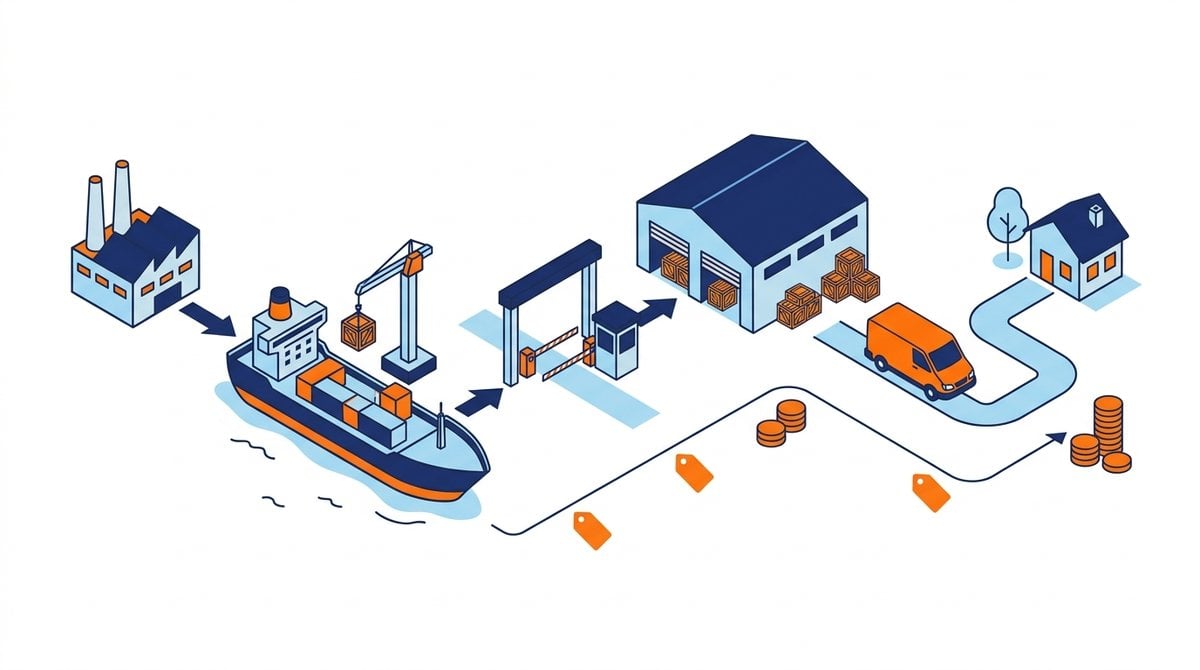
A product can look profitable on paper and still lose you money. You buy a unit for eight dollars, sell it for twenty, and assume a healthy margin. Then the freight invoice arrives, customs adds duty, the broker charges a fee, and the oversized box triggers a dimensional weight surcharge. That eight dollar product actually cost you eleven or twelve to get to the warehouse, and more to reach the customer. That gap is landed cost, and if you are not tracking it, you are pricing blind.
Landed cost is the total cost to get a product from your supplier all the way to its destination, including the product itself, shipping, customs duties, taxes, insurance, and handling fees. It matters more now than it used to. With the Section 321 de minimis exemption suspended, duties apply to low-value shipments that used to clear the border for free, so landed cost is often the number that decides whether a cross-border product still makes sense. This guide breaks down what goes into it, how to calculate it, and how to bring it down.
What Is Landed Cost?
Landed cost is the full, all-in cost of a product once it has arrived at its destination, not just the price you paid the supplier. It answers a simple question: by the time this item is sitting in my warehouse ready to sell, how much did it really cost me?
The reason it trips people up is that the supplier’s invoice is only the first line. Getting the product from a factory overseas to a U.S. fulfillment center adds freight, insurance, customs duties, taxes, and clearance fees on top of the unit price. Miss any of those and your margin math is wrong. Businesses that price off the product cost alone routinely discover their “profitable” SKUs are barely breaking even once landed cost is counted.
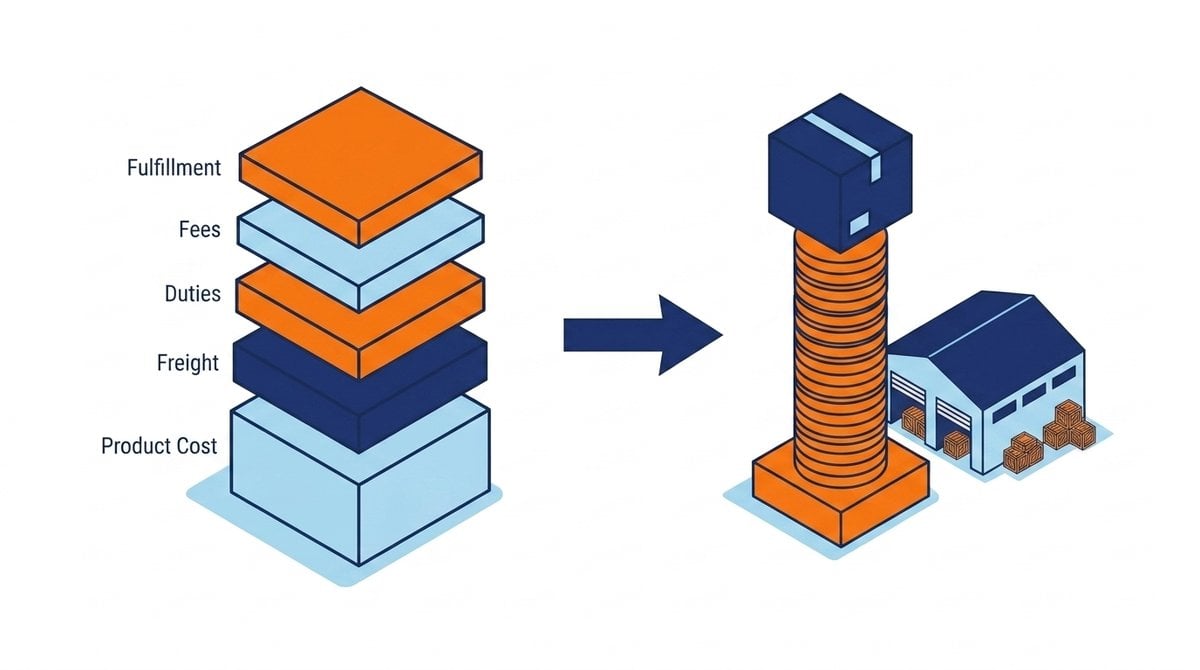
Components of landed cost: product, freight, duties, taxes, fees, and fulfillment.
What Is Included in Landed Cost?
Landed cost is the sum of every cost between your supplier and your shelf. The main line items:
| Component | What it covers |
| Product (unit) cost | What you pay the supplier per unit, including any minimums |
| Freight and shipping | Ocean, air, or ground transport from origin to destination |
| Customs duties | Import duty based on the product’s classification and origin |
| Taxes and tariffs | Any additional tariffs or import taxes that apply |
| Insurance | Coverage for loss or damage in transit |
| Customs brokerage and clearance | Broker fees and processing charges to clear the shipment |
| Fulfillment costs | Receiving, storage, and pick and pack costs once it lands |
That last row is the one most calculators leave out. True landed cost does not end at the customs line. Storage, handling, dimensional weight surcharges, and returns all sit inside the real cost of selling a unit, and they are where a good fulfillment partner moves the number.
The Landed Cost Formula (With a Worked Example)
The formula is straightforward once you have the pieces:
Landed cost = product cost + shipping and freight + customs duties and taxes + insurance + overhead (brokerage and handling fees)
Here is a worked example for a shipment of 500 units of a product that costs eight dollars each. The figures below are illustrative, your duty rate and fees will differ by product and origin.
| Line item | Amount |
| Product cost (500 x $8.00) | $4,000 |
| International freight | $1,200 |
| Customs duty (example 5% of $4,000) | $200 |
| Customs fees (example, MPF) | $34 |
| Insurance | $40 |
| Customs brokerage | $100 |
| Total landed cost | $5,574 |
| Landed cost per unit ($5,574 / 500) | $11.15 |
The sticker price was eight dollars. The true landed cost is $11.15 per unit, roughly 39 percent higher. Depending on the product’s country of origin, the duty rate can be far higher than this five percent example, so run your own numbers rather than assuming a low rate. If you had priced or forecast margin off the eight dollar figure, every sale would quietly underperform your projection. That is the entire point of calculating landed cost: you cannot price a product you cannot cost.
Landed Cost vs COGS vs Unit Cost
These three get used interchangeably, and they are not the same:
- Unit cost is just what you pay the supplier per item.
- Cost of goods sold (COGS) is an accounting figure for the direct cost of the goods you sold in a period.
- Landed cost is the full delivered cost of getting the product to you, including freight, duties, and fees.
Landed cost is the most useful number for pricing decisions because it reflects what the product actually costs you to have on hand, not just what the supplier charged.
How the End of De Minimis Changed Landed Cost
For years, a large share of low-value ecommerce imports skipped duty entirely. Shipments valued at $800 or less could enter the U.S. duty-free under the Section 321 de minimis exemption, which is why many direct-from-overseas models penciled out.
That exemption has been suspended. Low-value commercial shipments that used to clear for free are now dutiable and have to be formally entered, which adds duty and clearance costs to items that previously had neither. For sellers who built their pricing around duty-free entry, landed cost did not just go up, it appeared where there used to be nothing. If your model relied on de minimis, recalculate your landed cost now, and see our Section 321 and international fulfillment pages for the current path forward.
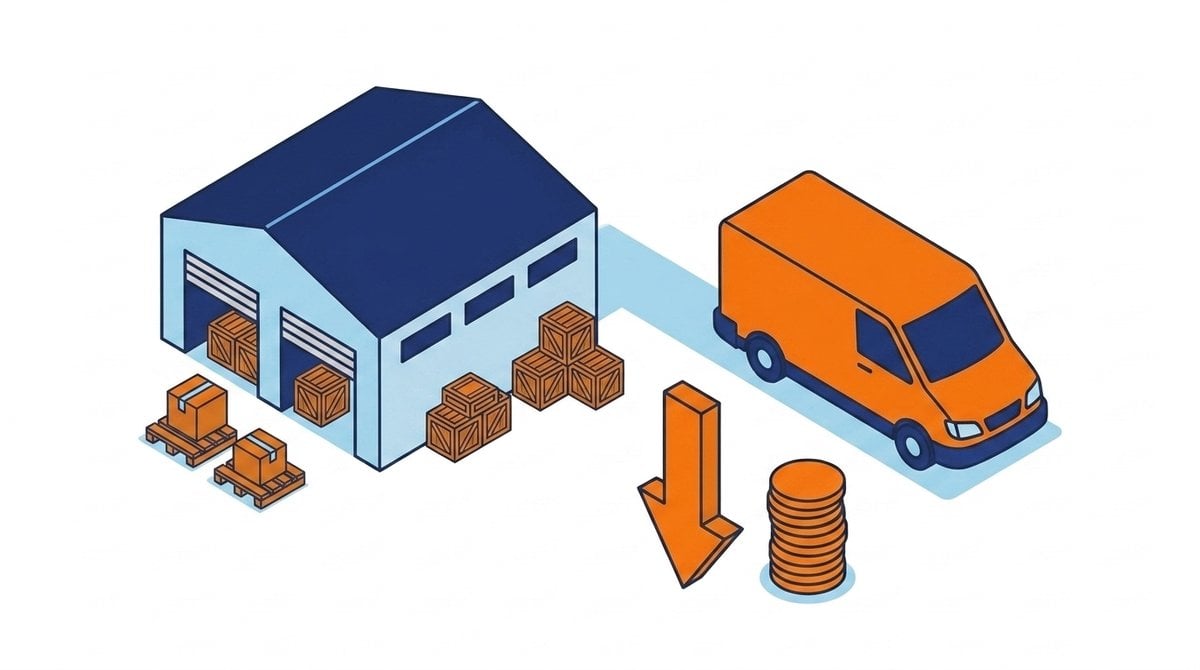
Levers to lower your landed cost.
How to Reduce Your Landed Cost
You cannot make duties disappear, but you can pull several levers to bring the total down:
- Import in bulk and clear once. Consolidating shipments spreads freight and clearance costs across more units instead of paying them on small, frequent parcels.
- Right-size your packaging. Dimensional weight surcharges are pure waste. A light product in an oversized box gets billed on the box, not the item. Run parcels through our dimensional weight calculator and use our shipping box sizes guide to cut avoidable dimensional weight charges.
- Optimize your carrier mix. Rates vary by carrier and lane. Matching each shipment to the best option, rather than defaulting to one carrier, lowers freight on the fulfillment side. See our shipping and transportation options.
- Use U.S.-based fulfillment. Storing inventory close to your customers shortens the last mile and can move some lanes from expensive expedited freight to standard ground.
- Know your true costs. Review pick and pack costs and how 3PL pricing works so no line item is a surprise.
How IWS Helps You Control Landed Cost
Landed cost is a fulfillment problem as much as an import one. As a U.S.-based 3PL, IWS helps on both sides: we handle bulk import receiving and clearance, apply negotiated carrier rates that most growing brands cannot access alone, store inventory close to your customers to shorten transit, and give you transparent cost reporting so every part of your landed cost is visible. To map your landed cost from bulk import through last-mile delivery, contact Innovative Warehouse Solutions today.
Landed Cost FAQ
What is landed cost in simple terms?
Landed cost is the total cost to get a product from your supplier to its destination, including the product price, shipping, customs duties, taxes, insurance, and handling fees. It is what the item truly costs you, not just what the supplier charged.
What is included in landed cost?
Product or unit cost, freight and shipping, customs duties, taxes and tariffs, insurance, customs brokerage and clearance fees, and fulfillment costs such as receiving, storage, and pick and pack.
How do you calculate landed cost?
Add the product cost, shipping and freight, customs duties and taxes, insurance, and overhead such as brokerage and handling fees. Divide the total by the number of units to get landed cost per unit.
Is landed cost the same as COGS?
No. Cost of goods sold is an accounting measure of the direct cost of goods sold in a period, while landed cost is the full delivered cost of getting a product to you, including freight, duties, and fees. Landed cost is the more useful figure for pricing.
How can I reduce my landed cost?
Import in bulk to spread fixed costs, right-size packaging to avoid dimensional weight surcharges, optimize your carrier mix, use U.S.-based fulfillment to shorten the last mile, and track every cost line so nothing is a surprise.
About the Author
Innovative Warehouse Solutions (IWS) is a U.S.-based third-party logistics (3PL) and order fulfillment provider. We help ecommerce and B2B brands with warehousing, pick and pack, kitting and assembly, and small parcel shipping. This article was written by the IWS operations team, drawing on hands-on experience running fulfillment for growing brands.