

Fulfillment solutions


What Is a 3PL? Third-Party Logistics Explained for Growing Brands
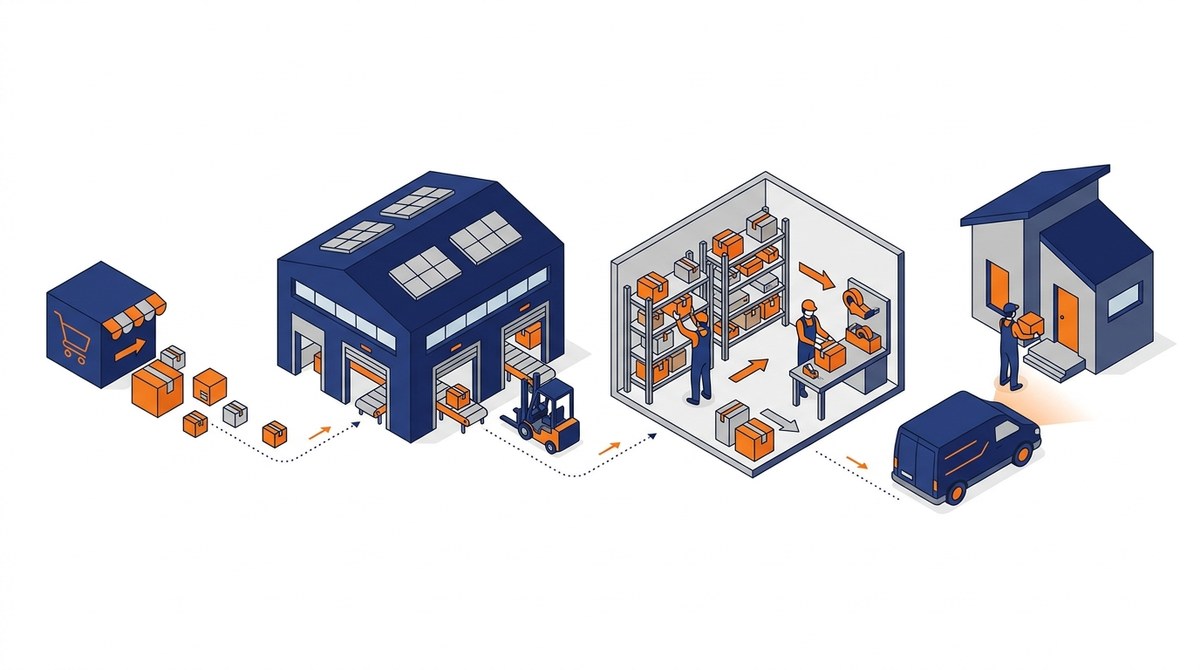
A 3PL, or third-party logistics provider, is a company that stores your inventory, picks and packs your orders, and ships them to your customers for you. Instead of renting your own warehouse and hiring a fulfillment team, you hand those operations to a specialist who already has the space, the staff, the software, and the carrier rates. In short, a 3PL runs the physical side of your business so you can focus on selling.
That is the one-line answer. The rest of this guide covers what a 3PL actually does day to day, how it differs from a 4PL and from handling fulfillment in-house, what it costs, and how to tell when your brand has outgrown its own back room.
What Is a 3PL?
3PL stands for third-party logistics. It is the outsourcing of your warehousing and order fulfillment to an external provider. You ship your products to the 3PL in bulk, they store the inventory, and when an order comes in through your store or marketplace, they pull the right items, pack them, and hand them to a carrier for delivery.
The “third party” framing is worth unpacking. The first party is you, the brand that owns the product. The second party is your customer. The third party is the logistics company that sits between you and moves the goods. You stay the seller and keep the customer relationship. The 3PL is the operator behind the curtain.
For most ecommerce and B2B brands, a 3PL handles some or all of the following: receiving inbound shipments, storing inventory, pick and pack, kitting and assembly, shipping, and returns processing. Good providers also connect directly to your sales channels so orders flow in automatically and you can see stock levels in real time.
What Does a 3PL Actually Do?
The label “logistics” hides how much a full-service 3PL takes off your plate. Here is what happens to a product once it reaches the warehouse.
| Function | What the 3PL handles |
|---|---|
| Receiving | Unloading, counting, and inspecting your inbound inventory, then logging it into the system |
| Warehousing | Storing your products in an organized, trackable way so nothing gets lost or overstocked |
| Pick and pack | Pulling the exact items for each order and packing them safely for transit |
| Shipping | Choosing a carrier and service level, printing labels, and handing off parcels daily |
| Returns | Receiving, inspecting, and restocking or disposing of returned items |
| Reporting | Giving you visibility into inventory, order status, and fulfillment costs |
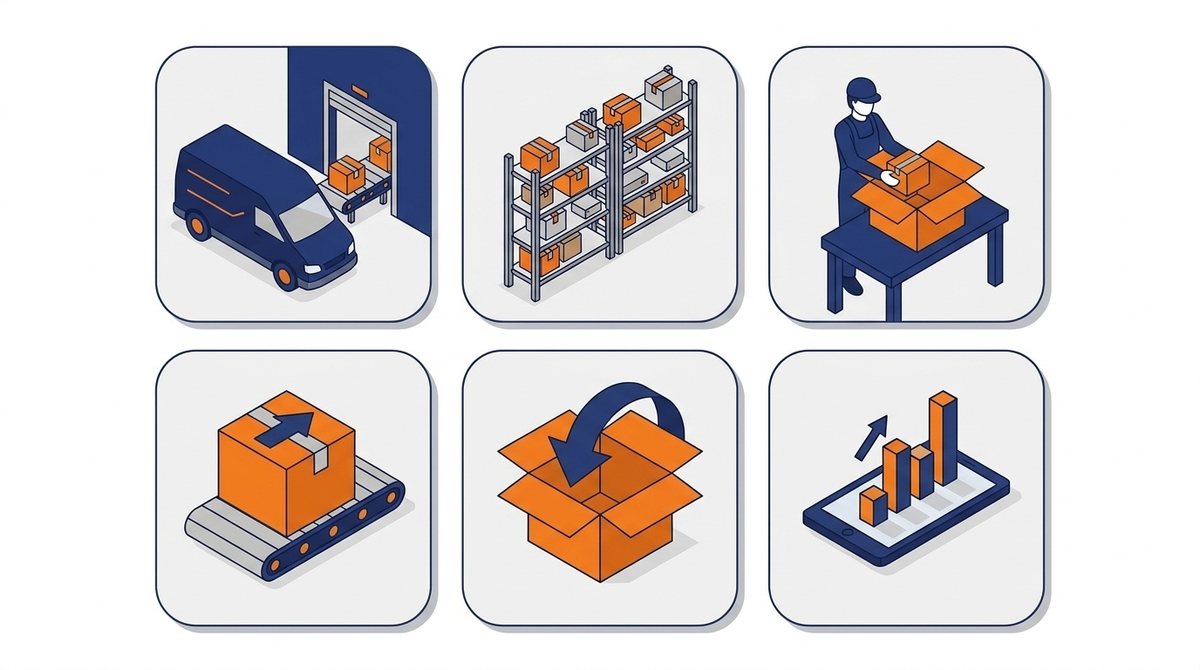
Core functions a 3PL handles: receiving, warehousing, pick and pack, shipping, returns, and reporting
A capable 3PL does not just move boxes. It optimizes the parts of fulfillment that quietly eat margin, right-sizing packaging to cut dimensional weight charges, matching each order to the cheapest sensible carrier, and holding inventory close to your customers so parcels travel shorter distances. Those decisions are invisible on a shipping label but they add up across thousands of orders.
3PL vs 4PL vs In-House Fulfillment
People often confuse a 3PL with a 4PL, and just as often wonder whether they should keep fulfillment in-house. The difference comes down to who does the work and who manages it.
| Model | Who does it | Best for |
|---|---|---|
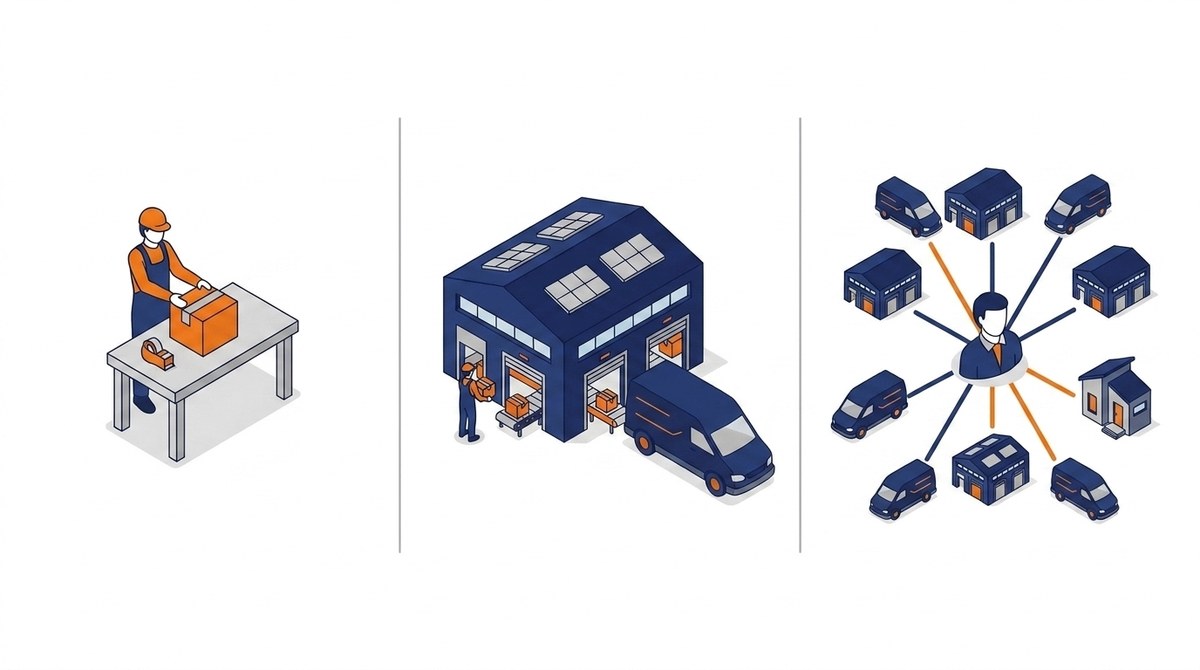
| In-house | You store, pack, and ship from your own space with your own team | Very early stage, low order volume, highly custom handling |
| 3PL | A provider runs warehousing and fulfillment, you manage the relationship | Growing brands that want operational scale without the overhead |
| 4PL | A manager coordinates multiple 3PLs and vendors on your behalf | Large, complex supply chains spanning many providers and regions |
A 3PL executes fulfillment. A 4PL sits a level above and manages the providers, including 3PLs, that execute it. Most growing ecommerce and B2B brands are best served by a strong 3PL. A 4PL only makes sense once your supply chain is large and fragmented enough to need a full-time coordinator.
How a 3PL Works, Step by Step
Working with a 3PL is more straightforward than most founders expect. The process usually looks like this.
- You send inventory in bulk. Your products arrive at the 3PL’s warehouse, where they are received, counted, and stored.
- You connect your store. The 3PL integrates with your ecommerce platform or marketplace so orders sync automatically.
- Orders come in and get fulfilled. When a customer buys, the order flows to the warehouse, where staff pick, pack, and ship it.
- You track everything. Inventory levels, order status, and costs are visible through the 3PL’s software, so you always know where things stand.
Once this is running, fulfillment becomes something you monitor rather than something you do. That shift is the entire point of using a 3PL.
The Benefits of Partnering With a 3PL
Outsourcing fulfillment is not only about saving time. For a growing brand, the right 3PL changes the economics of shipping and frees up the founder’s attention. The main benefits:
- Lower shipping costs. A 3PL ships enormous parcel volume, which earns carrier discounts that an individual brand cannot negotiate on its own. Those savings pass through to you.
- Faster delivery. Storing inventory in warehouses closer to your customers shortens transit times and can move orders from expensive expedited service to standard ground.
- Room to scale. You add capacity by shipping more inventory, not by signing a longer warehouse lease or hiring and training packers before a peak season.
- Fewer errors and returns. Dedicated pick-and-pack teams and barcode-driven systems catch mistakes that a stretched in-house team makes when volume spikes.
- Your time back. Every hour not spent packing boxes or chasing carriers is an hour spent on product, marketing, and growth.
The through-line is leverage. A 3PL lets a small team operate with the shipping economics and reliability of a much larger one. That is why partnering with a 3PL is often the step that lets a brand grow without breaking.
When Should You Move to a 3PL?
There is no universal order count that says “now.” The signals are operational, not just numeric. It is usually time to consider a 3PL when:
- Packing orders is crowding out the work that actually grows the business.
- You are running out of storage space or considering your first or second warehouse lease.
- Shipping costs feel high and you have no leverage to negotiate better rates.
- A busy season overwhelms your team every year.
- You want to offer faster delivery but cannot justify multiple warehouse locations on your own.
If two or more of those are true, the overhead of doing fulfillment yourself has probably started to outweigh the control you gain from it. If you are evaluating providers, see our 3PL fulfillment services.
How Much Does a 3PL Cost?
3PL pricing is usually built from a few recurring charges: receiving inbound inventory, monthly storage (often by the pallet, shelf, or bin), and a per-order pick-and-pack fee, plus the actual shipping cost. Some providers add account or integration fees.
The number that matters is not any single line item but your all-in cost per order, and whether the carrier savings and reduced overhead offset the fees. For a full breakdown of the common structures and what to watch for, see how 3PL pricing models compare and what typical pick and pack costs look like. A transparent 3PL will show you every charge up front so there are no surprises on the invoice.
How to Choose the Right 3PL
Not every 3PL fits every brand. When you evaluate providers, weigh a few things that tend to matter more than headline pricing:
- Location. Warehouses near your customers cut transit time and shipping cost. If you sell nationwide, ask where the fulfillment locations are.
- Integrations. The 3PL should connect cleanly to the platforms you already sell on, so orders and inventory sync without manual work.
- Specialization. Some providers focus on ecommerce, some on B2B and retail, some on international or temperature-sensitive goods. Match the provider to how you actually ship.
- Transparency. Clear reporting and itemized pricing tell you the provider has nothing to hide.
How IWS Helps
Innovative Warehouse Solutions is a U.S.-based 3PL built for growing ecommerce and B2B brands. We receive your inventory, store it in warehouses positioned close to your customers, pick and pack every order, and ship it on negotiated carrier rates that most brands cannot access alone. Our platform integrates with your sales channels and gives you real-time visibility into inventory, orders, and costs, so fulfillment stops being a bottleneck and becomes a strength. To see how a 3PL partnership would work for your brand, contact Innovative Warehouse Solutions for a quote.
3PL FAQ
What does 3PL stand for?
3PL stands for third-party logistics. It refers to a company that handles warehousing and order fulfillment on behalf of another business, storing inventory, packing orders, and shipping them to customers.
What is a 3PL company?
A 3PL company is a provider that stores your products, picks and packs your orders, and ships them to your customers. It gives growing brands warehouse space, fulfillment staff, software, and discounted carrier rates without the cost of building those operations in-house.
What is 3PL in logistics?
In logistics, 3PL means outsourcing the physical fulfillment of orders to a third party. The provider manages receiving, storage, pick and pack, shipping, and returns, while you keep ownership of the product and the customer relationship.
What is the difference between a 3PL and a 4PL?
A 3PL performs fulfillment, warehousing, packing, and shipping. A 4PL manages the providers that perform it, coordinating multiple 3PLs and vendors across a larger supply chain. Most growing brands need a 3PL. A 4PL suits large, complex operations.
Is a 3PL worth it for a small business?
For many small businesses, yes, once packing and shipping start crowding out growth work or shipping costs climb with no way to lower them. A 3PL turns fulfillment into a predictable per-order cost and often reduces shipping spend through volume carrier discounts.
About the Author
Innovative Warehouse Solutions (IWS) is a U.S.-based third-party logistics (3PL) and order fulfillment provider. We help ecommerce and B2B brands with warehousing, pick and pack, kitting and assembly, and small parcel shipping. This article was written by the IWS operations team, drawing on hands-on experience running fulfillment for growing brands.