

Fulfillment solutions


B2B Fulfillment Pricing Models: A Transparent Breakdown for Growing Brands
Getting a clear answer on fulfillment costs shouldn’t feel like solving a puzzle. Yet many brands struggle to compare 3PL pricing quotes when fees are bundled, hidden, or explained in confusing terms.
B2B fulfillment pricing works differently than direct-to-consumer shipping. Wholesale orders are larger, ship to retailers instead of homes, and come with compliance requirements that affect your costs. Knowing how 3PLs structure their fees helps you budget accurately and avoid surprises.
This guide breaks down the main B2B fulfillment pricing models, explains what drives your costs, and shows you what to watch for when comparing quotes.
Key Takeaways
- The four main B2B fulfillment pricing models are per-order, per-unit, hybrid, and all-inclusive, each suited to different order volumes and business patterns.
- Your total fulfillment cost includes receiving fees, storage fees, pick and pack charges, shipping, and B2B-specific services like EDI and retailer compliance labeling.
- Always request itemized quotes and ask about hidden fees like onboarding charges, minimum monthly spend, and peak season surcharges before signing a contract.
B2B Fulfillment Pricing Models Explained
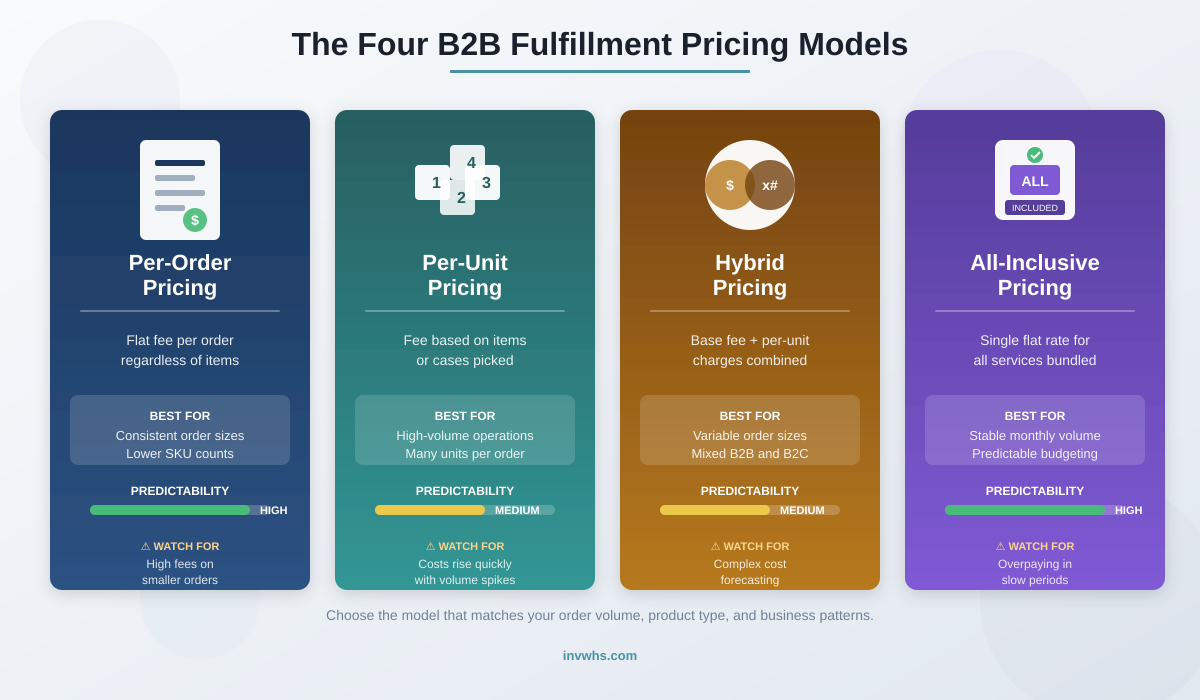
B2B fulfillment pricing models are the fee structures 3PLs use to charge for storing, picking, packing, and shipping your wholesale and retail orders. The right model for your business depends on your order volume, product type, and how consistent your orders are month to month.
Most 3PLs use one of four pricing approaches. Each has trade-offs worth considering before you sign a contract.
Per-Order Pricing
This model charges a flat fee for each order processed, regardless of how many items are included. It works well for brands with consistent order sizes and fewer SKUs in their catalog.
The downside? High per-order fees can cut into your margins on smaller wholesale orders. If your average order value varies widely, this model may not be the best fit.
Per-Unit Pricing
Per-unit pricing charges based on the number of items or cases picked and packed. Your costs scale directly with your order volume, which makes forecasting straightforward.
This model suits high-volume operations where each order contains many units. Just be aware that costs can climb quickly during busy seasons when your volume spikes.
Hybrid Pricing
Hybrid models combine a base order fee with per-unit charges. You pay a smaller flat fee per order, plus an additional amount for each item picked.
This approach offers flexibility for brands with variable order sizes or mixed B2B and B2C operations. The trade-off is more complex cost forecasting since multiple fee components apply to each order.
All-Inclusive Pricing
All-inclusive pricing bundles storage, fulfillment, and sometimes shipping into a single flat rate. Monthly costs stay predictable, which simplifies budgeting.
This model works best for brands with stable, predictable order volume. If your sales fluctuate seasonally, you may overpay during slower months.
| Pricing Model | Best For | Cost Predictability | Main Risk |
| Per-Order | Consistent order sizes | High | Margin loss on small orders |
| Per-Unit | High-volume operations | Medium | Rapid cost increases with volume |
| Hybrid | Variable order patterns | Medium | Complex forecasting |
| All-Inclusive | Stable monthly volume | High | Overpaying in slow periods |
When reviewing your options, ask each 3PL to explain their pricing structure in writing. A transparent provider will break down every fee category without hesitation.
What Drives B2B Fulfillment Costs
Regardless of which pricing model a 3PL uses, the same cost categories apply to every B2B operation. Knowing what drives each category helps you compare quotes and spot missing fees.
Receiving and Storage
Receiving fees cover the labor to unload your inventory when it arrives at the warehouse. Some 3PLs charge per pallet, others charge per container or by the hour. Ask how receiving is calculated before your first shipment arrives.
Storage fees are charged weekly or monthly based on the space your inventory occupies. Rates differ by storage type. Pallet storage costs more than bin storage for smaller quantities. Keep seasonal inventory swings in mind when estimating your storage costs throughout the year.
Pick, Pack, and Shipping
Pick and pack fees make up a significant portion of your fulfillment costs. Most 3PLs charge a first-item pick fee plus a lower fee for each additional item in the order. Case picks typically cost less per unit than individual unit picks.
B2B orders often ship via LTL (less-than-truckload) or FTL (full truckload) freight rather than small parcel carriers. 3PLs with strong carrier relationships can pass along volume discounts that reduce your shipping costs.
B2B-Specific Services
Selling to retailers adds service requirements that affect your pricing. EDI integration fees cover the electronic data exchange systems retailers require. Labeling fees apply when orders need retailer-specific barcodes like GS1-128 or SSCC labels.
Routing guide preparation is another cost factor. Retailers issue chargebacks when shipments don’t meet their specifications. A 3PL experienced in retail compliance can help you avoid these penalties.
If you sell health, beauty, or beverage products, lot and expiration tracking is likely required. This service adds cost but protects you from shipping expired products and facing recalls or customer complaints.
Hidden Costs and How to Evaluate Pricing
Many 3PLs advertise competitive base rates but add fees that inflate your true cost. Before signing any contract, ask about these common charges.
Onboarding and setup fees range from $500 to $2,000 or more at some providers. These cover account creation, system integration, and initial training. Some 3PLs, including IWS, charge no onboarding fees at all.
Minimum monthly charges require you to pay a set amount even if your order volume drops below a threshold. Peak season surcharges add extra fees during holiday periods when warehouse capacity is limited. Technology fees may apply for API access, EDI connections, or advanced reporting features.
Long-term storage penalties kick in when inventory sits beyond 90 or 180 days. Returns processing fees cover receiving, inspecting, and restocking products your customers send back.
When comparing quotes, take these steps to get an accurate picture of your fulfillment costs.
| Questions to Ask Before Signing |
| What fees are not included in this quote? |
| Are there minimum monthly charges? |
| What are your peak season surcharges? |
| Is EDI integration included or extra? |
| What is the contract length and renewal policy? |
Request itemized quotes rather than bundled pricing. Calculate your total cost per order by adding all fees together and dividing by your projected monthly volume. Model different scenarios at your current volume, 50% higher, and 50% lower to see how pricing scales.
The selecting a fulfillment provider process takes time, but thorough research now prevents costly surprises later.
Choosing the Right B2B Fulfillment Partner
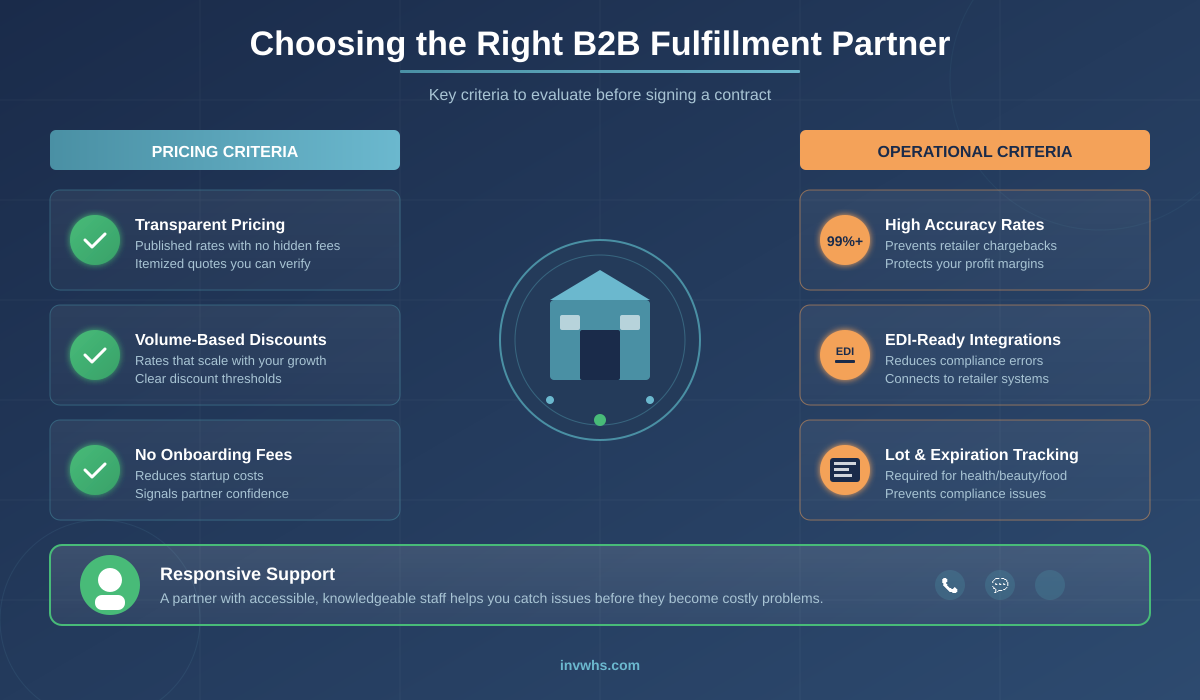
Before pricing, decide on the operational structure — IWS’s B2B fulfillment services page walks through pallet-vs-each pricing models. It’s because the lowest price doesn’t always mean the best value. When evaluating 3PL partners, look beyond the base rate to find a provider that fits your business needs.
Transparent pricing should be your first filter. A 3PL willing to publish their rates and explain every fee signals confidence in their value. Ask for references from brands similar to yours and verify that quoted prices matched actual invoices.
Volume-based discounts matter as you grow. Your fulfillment partner should reward increased volume with lower per-order or per-unit rates. Confirm how discounts are structured and at what thresholds they apply.
Operational quality directly affects your costs. High accuracy rates (99% or better) prevent retailer chargebacks that erase any savings from lower fulfillment fees. EDI-ready integrations reduce compliance errors and manual work.
If your products require lot tracking or expiration management, confirm your 3PL can handle these needs. Responsive support matters just as much. Problems that sit unresolved become expensive. A partner with accessible, knowledgeable staff helps you catch issues before they escalate.
Learn more about what sets a quality provider apart on our why IWS page.
B2B Fulfillment Pricing Models FAQs
How much does B2B fulfillment typically cost?
B2B fulfillment costs vary based on order volume, storage needs, and service requirements, but most brands pay between $3 and $10 per order for pick and pack fees. Storage fees typically range from $0.50 per bin to $10+ per pallet weekly.
What is the difference between B2B and B2C fulfillment pricing?
B2B pricing often includes additional fees for pallet handling, EDI integration, and retailer compliance labeling that B2C fulfillment doesn’t require. B2B orders are typically larger but less frequent, which changes how pick fees and shipping costs are calculated.
Can you negotiate B2B fulfillment rates with a 3PL?
Yes, most 3PLs will negotiate rates based on your projected order volume and contract length. Come prepared with accurate volume forecasts and quotes from other providers to strengthen your position.
How often do 3PL pricing rates change?
Most 3PLs review and adjust rates annually, though some lock in pricing for the full contract term. Ask about rate increase caps and how much advance notice you’ll receive before any changes take effect.
About the Author
Innovative Warehouse Solutions (IWS) is a U.S.-based third-party logistics (3PL) and order fulfillment provider. We help ecommerce and B2B brands with warehousing, pick and pack, kitting and assembly, and small parcel shipping. This article was written by the IWS operations team, drawing on hands-on experience running fulfillment for growing brands.