






Proof of Delivery Management for B2B Fulfillment: Protecting Your Wholesale and Retail Shipments
When a pallet arrives at a retailer’s dock with missing cases, who takes the blame? Without proper documentation, your business could face chargebacks worth thousands of dollars. A single disputed shipment can damage retailer relationships you spent years building.
Proof of delivery management is the process of documenting, verifying, and storing confirmation that shipments reached your business customers complete and undamaged. For companies selling to retailers and wholesalers, this goes far beyond getting a signature at the door.
Strong POD practices protect your revenue. They help you fight unfair chargebacks and resolve disputes quickly. They keep your B2B fulfillment operations running smoothly.
This guide covers what B2B proof of delivery includes, why it matters for your wholesale and retail accounts, and how to manage POD across all your business customers.
What Is Proof of Delivery in B2B Fulfillment?
Proof of delivery in B2B confirms that a shipment reached a business location and was accepted by an authorized person. This is different from consumer deliveries where a driver might leave a package on a porch.
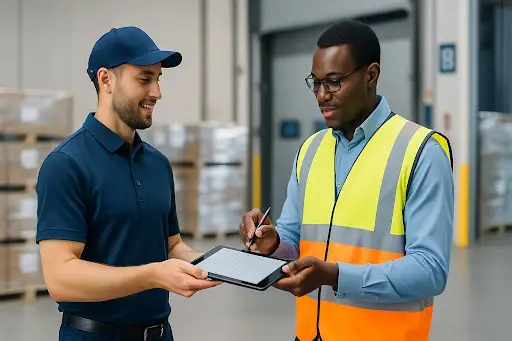
B2B deliveries involve formal receiving procedures. Shipments arrive at loading docks during scheduled appointments. Receiving clerks inspect pallets and cases before signing. Any damage or shortage gets noted on the spot.
POD serves three main purposes in B2B operations. First, it acts as legal evidence if shortage or damage claims arise later. Second, it verifies that you met retailer compliance requirements. Third, it triggers invoice processing so you get paid.
A complete B2B proof of delivery includes several documents working together. The bill of lading (BOL) serves as the primary record, signed by both carrier and recipient. A packing slip confirms what items were included. Condition notes document any visible damage or quantity issues. Timestamps prove the delivery happened within the required window. Photos of pallet condition provide visual evidence if disputes arise.
POD works alongside other B2B documents like the Advanced Shipping Notice (ASN) and purchase order. Together, these create a complete paper trail from order placement through delivery confirmation.
Why POD Management Matters for B2B Operations
Poor proof of delivery practices cost businesses real money. Chargebacks, disputed invoices, and damaged relationships add up fast. Here’s why getting POD right protects your bottom line.
Prevent Retailer Chargebacks
Major retailers issue chargebacks when shipments don’t meet their standards. Late deliveries, wrong quantities, and missing documentation all trigger penalties. These chargebacks can range from flat fees to a percentage of your entire invoice.
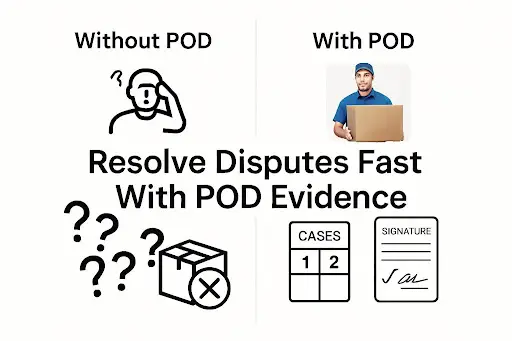
Proper POD gives you evidence to dispute unfair chargebacks. When you have signed BOLs, timestamped photos, and condition notes, you can prove your shipment arrived correctly. Without this documentation, you have no defense.
Resolve Shortage and Damage Claims
B2B disputes often involve quantity problems. A retailer claims they received 48 cases when you shipped 50. Or they say products arrived damaged and want credit.
POD with photos and condition notes protects you from false claims. If the receiving clerk signed for 50 cases in good condition, you have proof. This documentation makes dispute resolution faster and fairer for everyone.
The same applies to damage claims. Photos taken at delivery show the actual condition of your products when they left the carrier’s hands. This matters when determining who is responsible for damage: you, the carrier, or the customer.
Speed Up Payment Processing
Many B2B customers pay based on receipt confirmation. Clean POD documentation triggers invoice approval in their system. The faster you provide proof of delivery, the faster you get paid.
Disputes slow everything down. When a customer questions a delivery, your invoice sits unpaid until the issue is resolved. Strong POD practices prevent these delays and improve your cash flow.
Support Inventory Accuracy
POD helps you keep inventory records straight. When deliveries are confirmed, you can update your systems with confidence. You know exactly what left your warehouse and what arrived at your customer’s location.
This becomes more complex with partial deliveries and backorders. Good POD documentation tracks what was delivered versus what remains outstanding. It supports accurate lot and batch tracking for products that require it.
Every fulfillment mistake that goes undocumented creates problems down the line. POD catches issues early so they can be fixed before they grow.
Types of B2B Proof of Delivery Documentation

Different documents serve different purposes in B2B proof of delivery. Understanding each type helps you build a complete documentation system.
| Document Type | Purpose | When It’s Used |
| Bill of Lading (BOL) | Legal record of shipment transfer | All freight and pallet shipments |
| Signed Delivery Receipt | Confirms items received match items shipped | Retailer PO reconciliation |
| Electronic POD (ePOD) | Digital capture with GPS and timestamps | Real-time tracking and system integration |
| Photo Documentation | Visual evidence of condition at delivery | High-value orders and damage prevention |
| Retailer-Specific Forms | Meets individual account requirements | Accounts with unique compliance standards |
Bill of Lading (BOL)
The BOL is the primary legal document for freight shipments. Carriers sign it at pickup. Recipients sign it at delivery. It records quantity, weight, and condition of goods.
Any damage or shortage should be noted directly on the BOL at time of delivery. This notation becomes legal evidence if disputes arise later. Never let a driver leave without getting proper signatures and condition notes.
Electronic POD (ePOD)
Digital capture through carrier apps and handheld devices is now standard. ePOD includes GPS timestamps, electronic signatures, and barcode scans. This data syncs with warehouse and transportation management systems in real time.
The advantage of ePOD is speed. You know immediately when a delivery is complete. Your order management systems update automatically. Customer service can answer questions without waiting for paperwork to arrive.
Photo Documentation
Photos of pallet condition at delivery provide strong evidence for disputes. Images capture shrink wrap integrity, visible damage, and label placement. They show exactly what your shipment looked like when it arrived.
Smart businesses require photos for high-value shipments or accounts with frequent disputes. This small extra step can save thousands in chargeback costs.
Managing POD Across B2B Accounts
Managing proof of delivery gets complicated when you ship to many different business customers. Each retailer has their own requirements. Each carrier has their own processes. Here’s how to stay organized.
Standardize Your Documentation Processes
Set minimum POD requirements for all B2B shipments. Every delivery should have a signed BOL with condition notes. High-value orders should include photos. Create clear procedures that drivers and carriers must follow.
Consistency matters more than perfection. When every shipment follows the same documentation process, you can find records quickly when disputes arise. Random or inconsistent practices create gaps that cost you money.
Integrate with Your Systems
POD data should flow into your ERP or order management platform automatically. When a delivery is confirmed, your systems should update without manual entry. This reduces errors and speeds up invoicing.
Look for carriers and 3PL partners who offer system integration. The best setups give your customer service and accounting teams centralized access to all delivery documentation. No more hunting through emails or calling carriers for copies.
Address Retailer-Specific Requirements
Major retailers have unique compliance standards. Some require specific forms. Others want documentation uploaded to their portals. Many have strict windows for dispute resolution.
Track each account’s routing guide specifications. Know what documentation they require and how they want to receive it. Build these requirements into your standard processes so nothing falls through the cracks.
Handle Common Challenges
Several POD problems come up repeatedly in B2B operations:
- Partial deliveries: Document exactly what was delivered versus what remains on backorder. Make sure both quantities are clear on paperwork.
- Receiver refuses to note damage: Carriers should photograph and note issues on the BOL regardless of what the receiver does. This protects you even if the receiving clerk won’t cooperate.
- Missing signatures: Work with carriers who enforce signature capture at every stop. Electronic POD systems can require signatures before drivers can mark deliveries complete.
- Multiple POs on one shipment: Make sure documentation clearly ties to each purchase order. Retailers need to reconcile deliveries against their original orders.
How a 3PL Partner Handles B2B Proof of Delivery
Managing POD internally requires systems, training, and constant attention. Many growing businesses find it easier to work with a fulfillment partner who handles this complexity for them.
Why Outsourcing Simplifies B2B POD
Experienced 3PLs already have retailer compliance figured out. They work with major carriers daily and know what documentation standards to enforce. They have systems built for tracking and storing POD records.
When you select a fulfillment provider with B2B experience, you get their expertise without building it yourself. This is especially valuable if you’re growing into new retail accounts or increasing wholesale volume.
What to Expect from Your 3PL
A good fulfillment partner manages BOL and delivery receipt documentation for all outbound shipments. They integrate with major retailers and offer EDI-capable systems. They capture photos for pallet and freight shipments when needed.
You should have centralized access to all records. When a dispute comes in, you need to pull documentation quickly. Look for partners with searchable databases and fast retrieval times.
Reporting matters too. Your 3PL should track delivery success rates and carrier performance. This data helps you spot problems before they become expensive.
POD for B2B Returns
Returns require their own documentation trail. When products come back, you need confirmation that returned goods actually arrived at the warehouse. This supports credit memo processing and keeps inventory accurate.
Good returns processing includes inspection notes, condition documentation, and clear records of what was received. The same POD principles that protect outbound shipments apply to returns.
Choosing the Right Partner
Ask potential 3PL partners about their retailer experience. How many retail accounts do they serve? What compliance track record do they have? Can their documentation standards meet your largest accounts’ requirements?
Look for software that gives you 24/7 visibility into delivery status. Confirm they integrate with your existing sales platforms. Ask how they handle exceptions and what their dispute response process looks like.
Get Your B2B Proof of Delivery Right
Proof of delivery management protects your business from chargebacks. It helps you resolve disputes faster. It keeps your retail and wholesale relationships strong.
The stakes in B2B are higher than consumer shipping. One disputed pallet can mean significant financial loss. Building systematic POD processes now prevents expensive problems later.
As you scale into more retail accounts or grow wholesale volume, documentation complexity increases. Working with a fulfillment partner experienced in B2B and retail compliance removes this burden. You get full visibility into your deliveries without managing the systems yourself.
Ready to discuss your B2B fulfillment and proof of delivery needs? Contact us for a conversation about how we can help.
