

Fulfillment solutions


DDP vs DDU: Who Pays Import Duties, and How to Avoid Customs Delays
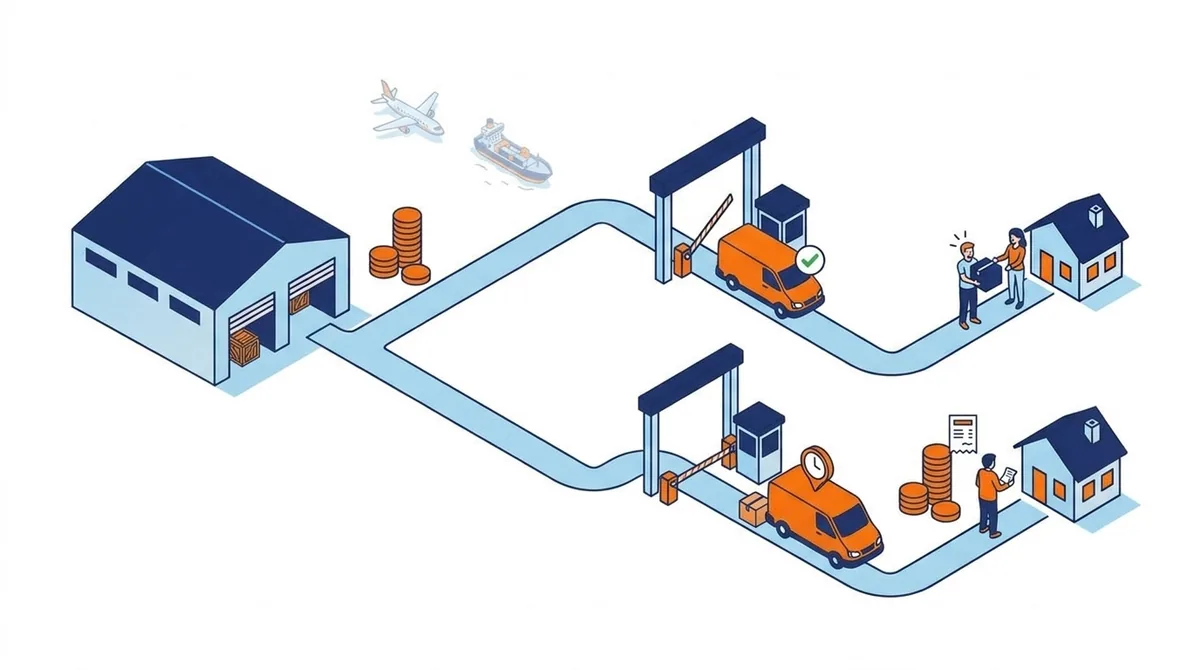
Under DDP, the seller pays import duties, taxes, and clearance costs before delivery. Under DDU, the buyer pays those charges when the parcel arrives.
That one choice decides who gets the bill at the border, how long a parcel can sit in customs, and whether your customer opens the door to a surprise charge. This guide covers what each term means in 2026, why DDU is no longer an official Incoterm, what causes customs clearance delays, and how recent de minimis changes in the US and the EU affect the decision.
What is the difference between DDP and DDU?
The difference between DDP and DDU is who pays import charges at the destination: the seller under DDP, and the recipient under DDU.
DDP stands for Delivered Duty Paid. The seller ships the goods to the buyer’s address and covers everything on the import side, including customs duty, import VAT or sales tax, and clearance fees. The buyer pays the checkout price and nothing more.
DDU stands for Delivered Duty Unpaid. The seller still pays to move the goods to the destination, but the import charges stay with the recipient. In ecommerce, that usually means the carrier asks the customer to pay duties, taxes, and a handling or clearance fee before it will hand over the parcel. DHL’s UK customs FAQ describes this default: the receiver is responsible for duties and taxes, and DHL pays them on the receiver’s behalf, then collects payment from the receiver.
Is DDU the same as DAP?
DDU is not an official Incoterm anymore: the ICC replaced it with DAP in Incoterms 2010, and DAP works almost the same way in practice.
The International Chamber of Commerce (ICC) publishes the Incoterms rules. Its Incoterms 2010 announcement states that two new rules, DAT and DAP, replaced the older DAF, DES, DEQ, and DDU terms, cutting the list from 13 rules to 11. Incoterms 2020 kept DAP, renamed DAT to DPU (Delivered at Place Unloaded), and kept DDP.
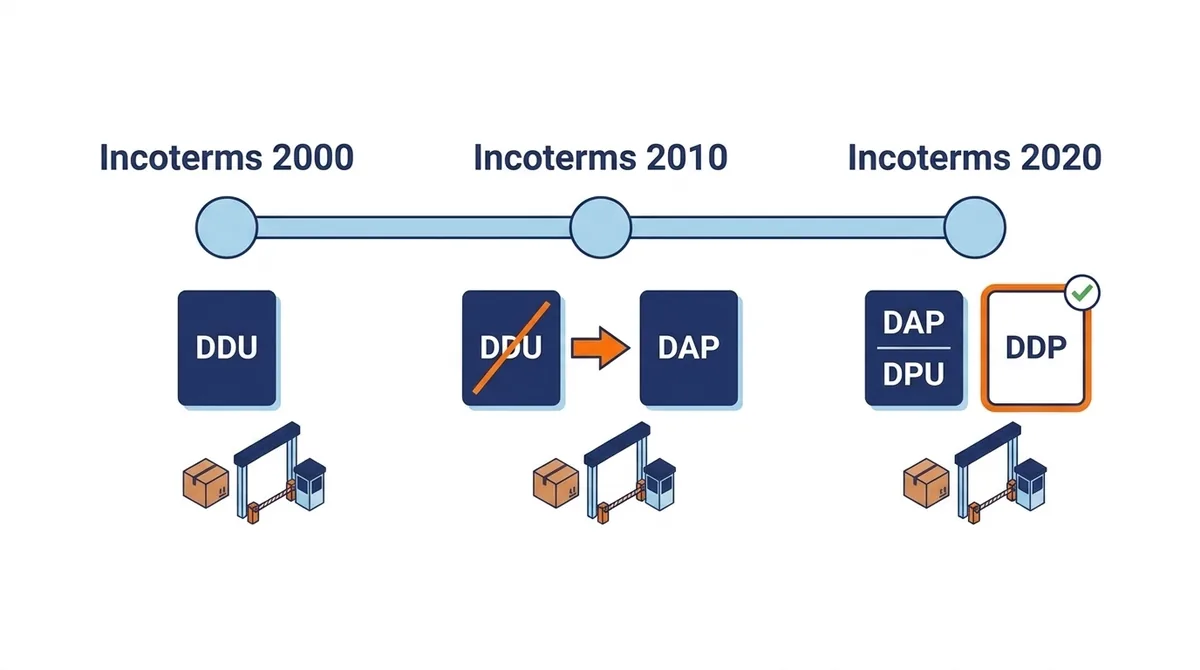
So why do you still see “DDU” in shipping software and on marketplace settings? Carriers and platforms kept the label as shorthand for “recipient pays duties and taxes.” When a contract cites Incoterms 2020, the correct term is DAP. When a carrier screen says DDU, it nearly always means the same thing for a parcel: your customer pays the import charges on delivery.
What does DDP mean for the seller?
DDP means the seller takes on the import side of the sale, paying duties and taxes and arranging customs clearance in the buyer’s country.
That responsibility is bigger than paying a bill. Someone has to be the importer of record. CBP’s guide for commercial importers, Importing into the United States, defines the importer of record as the owner, the purchaser, or a licensed customs broker designated by one of them, and says that party must use reasonable care when making entry under 19 U.S.C. 1484. Other countries have their own versions of this rule. A seller shipping DDP has to act as the importer or appoint someone who can.
Carriers offer programs for this. DHL Express calls its option Duties and Taxes Paid (DTP): DHL account holders can pay duties and taxes for the receiver and are billed afterward, plus an administration fee, according to DHL’s UK customs FAQ. In the EU, a non-EU seller that wants to collect VAT at checkout through the Import One-Stop Shop (IOSS) has to appoint an EU intermediary.
The other cost is pricing. You need to know your landed cost per order before the parcel ships, or duties will quietly eat your margin. Our guide to landed cost walks through the formula, and the dimensional weight calculator helps you check the shipping piece of that number.
What happens if a customer refuses to pay duties under DDU?
When a customer refuses to pay duties under DDU, the carrier holds the parcel, and the seller often pays for its return or disposal.
The customer never agreed to pay more than the checkout price, so a bill at the door can feel like a hidden fee. Carriers generally will not release the parcel until the charges are paid. If the customer refuses, the parcel sits in the destination country until it is sent back or abandoned. The seller then pays twice: once for the outbound shipment, and again for return freight or disposal, before it even counts the lost sale and the refund.
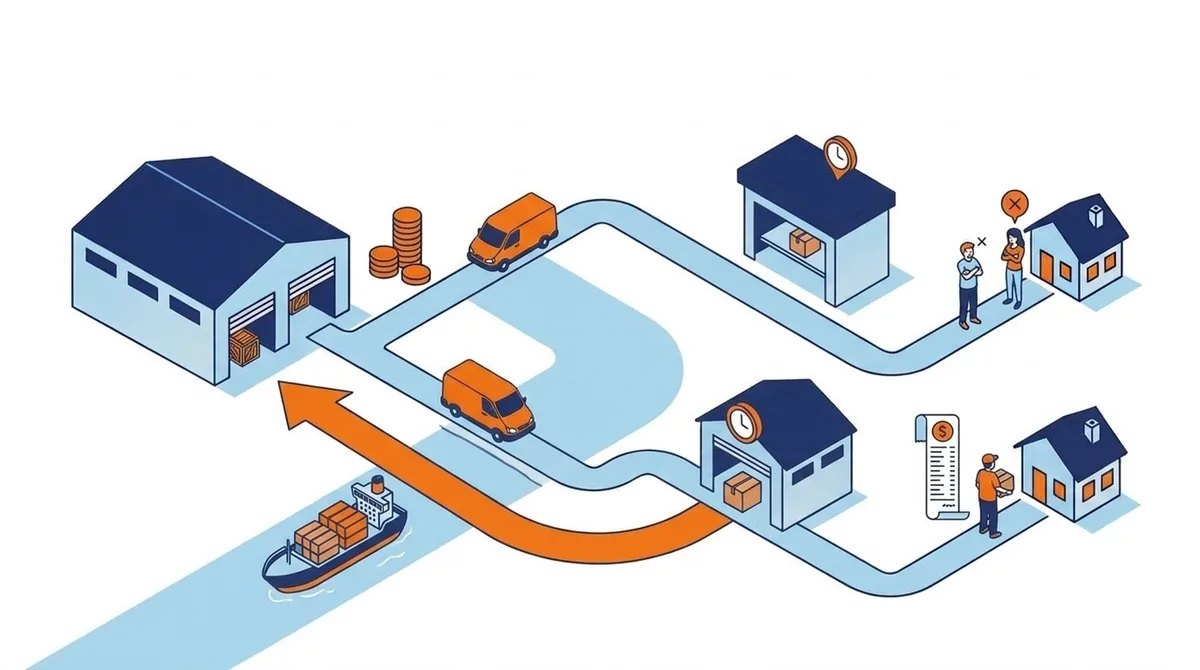
That is the main reason ecommerce brands move to DDP once international orders become a steady share of volume. Here is how the two terms compare side by side.
| Factor | DDP (Delivered Duty Paid) | DDU / DAP (Delivered Duty Unpaid / Delivered at Place) |
|---|---|---|
| Who pays import duties and taxes | Seller | Buyer or recipient |
| Who handles import clearance | Seller, or a carrier or broker acting for the seller | Buyer, or the carrier acting for the buyer |
| Customer experience | One price at checkout, no bill at delivery | Duties, taxes, and fees collected at the door |
| Risk of refused parcels | Low, since nothing is owed at delivery | Higher, since customers can refuse to pay |
| Official Incoterms 2020 rule? | Yes | DAP yes; DDU retired in 2010 |
| Best for | Direct-to-consumer ecommerce orders | B2B buyers with their own customs broker |
Is DDP shipping illegal?
DDP shipping is legal: it is one of the eleven ICC Incoterms 2020 rules, but misdeclaring value or origin to cut duties is not.
The term itself is fine. Problems start when the declared value, product description, or country of origin on the paperwork is false. CBP’s importer guide warns that an inaccurate or misleading statement on an entry document, or missing required information, can delay release, lead to detention of the goods, or bring a claim against the importer under 19 U.S.C. 1592. The importer has to show it used due diligence, even if the error was unintentional.
If a forwarder offers DDP into the US, ask who the importer of record is and ask to see the entry. If that party is you, the liability is yours.
What causes customs clearance delays?
Customs clearance delays usually start with the paperwork: an incomplete commercial invoice, a wrong HS code, a low declared value, or unpaid duties.
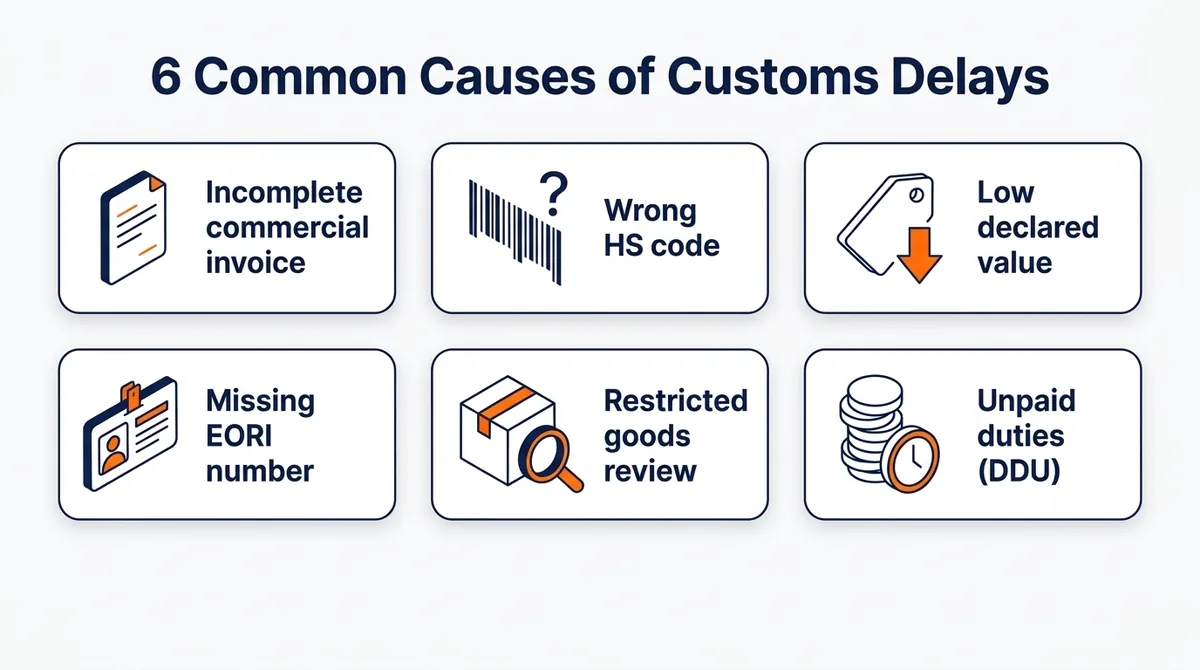
The commercial invoice is the core document. Under 19 CFR 141.86, CBP expects invoices for US imports to describe the precise nature of the goods, their value, and other required details. Vague descriptions such as “gift” or “parts” invite questions. Customs uses the Harmonized System (HS) code, called the HTS code in the US, to set the duty rate, so a wrong code can trigger a hold or a reassessment.
Value matters just as much. A declared value that looks too low for the product draws scrutiny, and CBP treats an inaccurate value as a reason to hold the goods.
Identification numbers are another common gap. In the EU, businesses that carry out customs operations need an EORI number, according to the European Commission’s EORI page, and non-EU operators need one if they lodge customs declarations.
Restricted goods slow things down too. Products regulated by other agencies, such as the FDA in the US, can need extra review before release. Under DDU, the last common cause is simple: the customer has not paid yet.
How long does a customs clearance delay last?
A customs clearance delay lasts until the missing piece arrives: customs releases the parcel once it has the documents, data, or payment it asked for.
There is no fixed clock. CBP’s importer guide notes that goods are not legally entered until CBP has authorized delivery and estimated duties have been paid, so a parcel waiting on payment waits as long as the payer does. A missing invoice can clear the same day it is supplied. A physical inspection or a question for another government agency takes longer.
The practical fix is speed. Check the carrier’s tracking for the reason code, send the requested document right away, and contact the customer if they owe charges. A parcel held for a DDU payment is the one delay the seller cannot fix alone, which is one more argument for DDP.
How do de minimis rules affect DDP and DDU?
De minimis rules decide whether low-value parcels owe duty, and in 2026 neither the US nor the EU offers a duty-free threshold for ecommerce parcels.
In the US, Section 321 used to let shipments valued at $800 or less enter duty-free. CBP announced that the exemption was suspended for all countries effective August 29, 2025, under Executive Order 14324. CBP’s e-commerce FAQ (last modified September 2, 2026) describes an indefinite suspension, says shipments of $800 or less must now use formal or informal entry, and confirms a new informal entry process for mail took effect July 24, 2026. In practice, every commercial shipment into the US owes its applicable duties, taxes, and fees. Our Section 321 page covers what this means for brands that used to ship direct from Canada or Mexico.
In the EU, the VAT exemption for goods under €22 ended on July 1, 2021. Sellers can collect VAT at checkout through the Import One-Stop Shop (IOSS) for consignments up to €150. Since July 1, 2026, the European Commission also applies a temporary €3 customs duty per item on parcels worth up to €150, counted by tariff classification rather than quantity, with the seller or importer responsible for declaring and paying it.
The result: under DDU, more customers now face a charge at the door than before. That raises the refusal risk and makes DDP more attractive for both export and import orders.
Is DDP or DDU better for ecommerce brands?
DDP is the better default for most direct-to-consumer ecommerce brands, while DDU or DAP still fits B2B buyers who clear goods through their own broker.
Choose DDP when you sell to consumers abroad, when your average order value is high enough that a surprise bill would hurt conversion, or when you ship into markets with no duty-free threshold. Price duties into checkout and use a carrier program or a cross-border partner that can handle the import side.
Choose DDU or DAP when your buyer is a business with its own customs broker or when the buyer wants control of import clearance. Make the terms clear on the order so nobody is surprised.
For brands importing inventory into the US, the decision changed with the end of de minimis. One common approach is to ship stock in bulk to a US warehouse and fulfill domestically, so customs is handled once per shipment instead of once per order. IWS’s international fulfillment page explains how it handles cross-border orders.
Innovative Warehouse Solutions (IWS) provides 3PL fulfillment from Farmingdale, New York, for brands doing $1M+ in revenue and 300+ orders a month. Pick and pack costs $2.50 for the first item and $0.40 for each additional item, with packing materials included, and storage starts at $0.50 per small bin per week. There are no receiving, onboarding, long-term storage, or monthly minimum fees. IWS reports 99.98% order accuracy, ships same day on orders placed by 11 AM EST, and connects to Shopify, Amazon, Walmart, eBay, Etsy, and WooCommerce. See full rates on the pricing page.
About the Author
Innovative Warehouse Solutions (IWS) is a U.S.-based third-party logistics (3PL) and order fulfillment provider. We help ecommerce and B2B brands with warehousing, pick and pack, kitting and assembly, and small parcel shipping. This article was written by the IWS operations team, drawing on hands-on experience running fulfillment for growing brands.