

Fulfillment solutions


FDA Registered vs FDA Approved Warehouse: What Supplement and Food Brands Actually Need
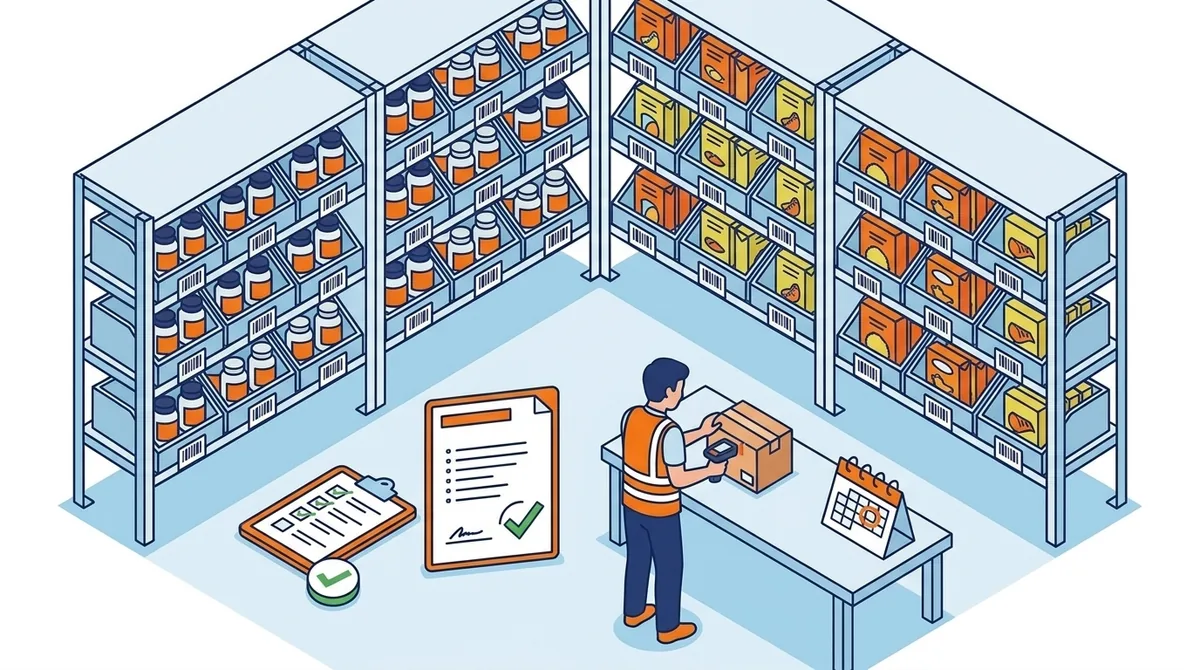
There is no such thing as an FDA approved or FDA certified warehouse. A warehouse that holds food or dietary supplements for U.S. consumption must register with FDA as a food facility under 21 CFR 1.225, and FDA states that a registration number does not convey its approval or endorsement of the facility or its products. What supplement and food brands actually need is a 3PL that is registered, keeps that registration current, stores product under proper conditions and can trace every lot to every customer.
What does FDA food facility registration mean?
Registration means the facility has told FDA who it is, where it is and what kinds of food it handles. Under 21 CFR 1.225, the owner, operator or agent in charge of a facility that manufactures, processes, packs or holds food for consumption in the United States must register, unless an exemption in 21 CFR 1.226 applies.
Three details matter for brands using a 3PL:
- Holding counts. FDA defines holding as storage of food, including activities incidental to storage and activities done as a practical necessity for distribution, such as breaking down pallets. A fulfillment warehouse that stores and ships your product is holding food.
- Supplements are food for this purpose. The regulation’s examples of food include dietary supplements and dietary ingredients, beverages and bottled water.
- Warehouses are not on the exemption list. The exemptions cover farms, retail food establishments, restaurants, certain nonprofits and a few other categories, not storage and distribution facilities.
Registration is free. FDA says there is no fee to register and that registrants are not required to use a third-party business or registrar.
Is an FDA-registered warehouse FDA approved?
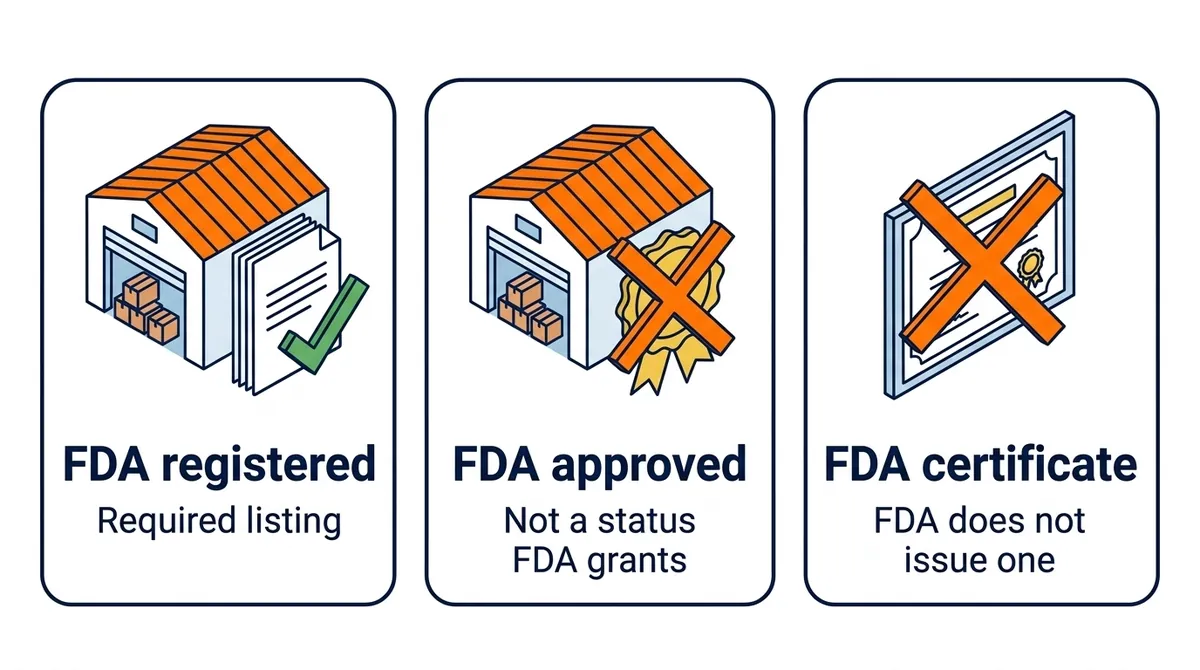
No. Registration is a listing in FDA’s system, not a seal of approval, and FDA does not approve, certify or issue certificates to warehouses. Here is how the terms compare:
| Term you will hear | What it actually means |
|---|---|
| FDA registered | The facility is in FDA’s food facility registration system and has a registration number. Required for facilities that hold food, unless exempt. |
| FDA approved | Not a status FDA grants to warehouses. FDA also does not approve dietary supplements before they are marketed; manufacturers and distributors are responsible for safety and labeling. |
| FDA certified / registration certificate | FDA does not issue registration certificates and does not recognize certificates issued by private businesses. |
| FDA inspected | FDA may inspect registered facilities. Ask a 3PL about its inspection history directly rather than inferring it from registration. |
If a 3PL shows you a framed “FDA certificate,” ask for the registration confirmation from FDA’s system instead, and ask when it was last renewed.
When does a food facility registration have to be renewed?
Every food facility registration must be renewed between October 1 and December 31 of each even-numbered year, so the current renewal window runs from October 1 to December 31, 2026. That rule is in 21 CFR 1.230(b).
A missed renewal has consequences. Under 21 CFR 1.241, FDA cancels a registration that has expired because the facility failed to renew, and failing to register is a prohibited act under the Federal Food, Drug, and Cosmetic Act. Registrations are also tied to a unique facility identifier that FDA verifies against the facility’s address before it confirms registration.
Innovative Warehouse Solutions (IWS) operates an FDA-registered food facility in Farmingdale, Long Island, New York. Its FDA-registered fulfillment page states that the warehouse is registered with FDA as a food facility and that IWS renews the registration every two years as federal rules require.
Does my brand need its own FDA registration if a 3PL stores my products?
Registration attaches to facilities, not to brands. If your company does not own or operate a facility that manufactures, processes, packs or holds food, the 3PL’s registration covers the 3PL’s building, and your contract manufacturer registers its own plant.
Your brand still carries the product obligations. For supplements, FDA places responsibility for evaluating safety and labeling on the manufacturers and distributors before products are marketed. Confirm your specific situation with a regulatory advisor, especially if you also pack, label or store product yourself.
What storage rules apply to supplements and food in a warehouse?
Beyond registration, current good manufacturing practice (CGMP) rules apply to how product is held. They are the requirements you should test a 3PL against:
- Dietary supplements, 21 CFR part 111. The rule applies to anyone who manufactures, packages, labels or holds a dietary supplement, and its retail exception expressly excludes warehouses. Section 111.455 requires holding product under conditions of temperature, humidity and light that do not affect identity, purity, strength and composition, and under conditions that prevent mixups, contamination and deterioration.
- Human food, 21 CFR part 117. Section 117.93 requires storage and transportation that protect against allergen cross-contact, contamination and deterioration of the food and its container. A facility solely storing unexposed packaged food is exempt from the preventive controls subparts, with modified requirements if the food needs temperature control.
- Records, 21 CFR part 1, subpart J. Persons who hold food must keep records of where food came from and where it went, and make them available to FDA within 24 hours of an official request in the circumstances the rule describes.
- Food Traceability Rule. Additional traceability records apply to foods on FDA’s Food Traceability List. FDA reports that Congress directed it not to enforce the rule before July 20, 2028.
How should a 3PL handle lot tracking and expiration dates?
A 3PL for supplements and food should capture the lot and expiration date at receiving, pick by expiration date, and record which lot shipped on every order. That last step is what makes a recall a targeted customer list rather than a full-catalog problem. Our guide to batch tracking shows how lot data moves from receiving to the shipping label.
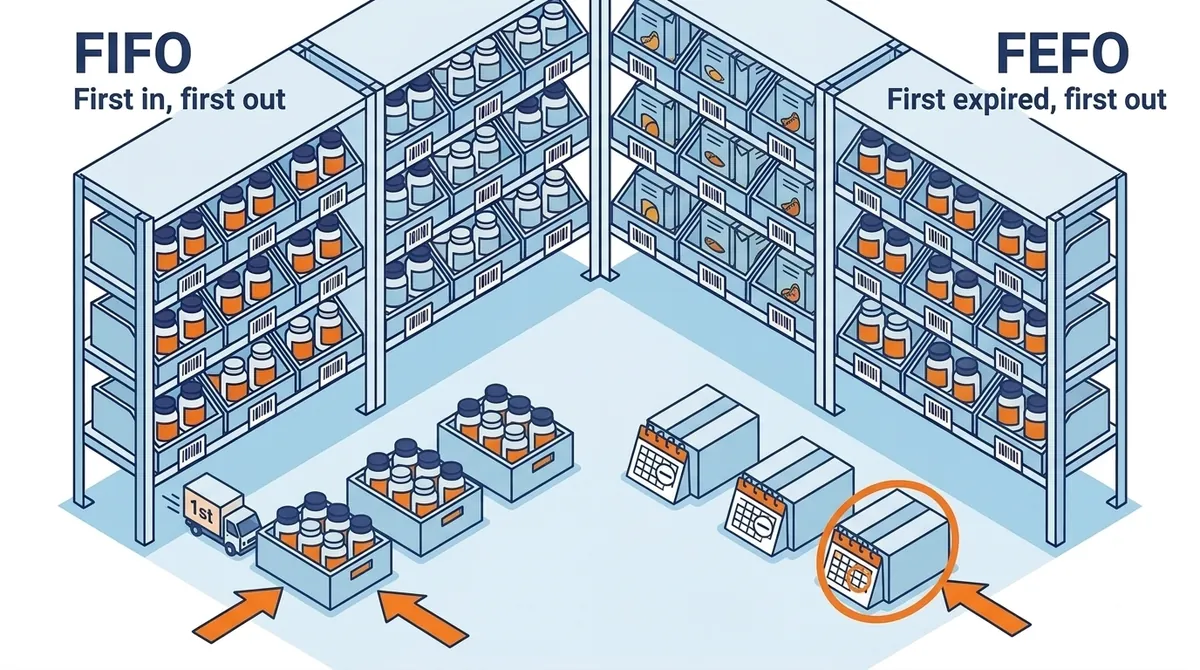
The common picking rules are FIFO (first in, first out, by receipt date) and FEFO (first expired, first out, by expiration date). FEFO is generally the safer default for dated products because a newer receipt can carry an earlier expiration date. Ask which rule the 3PL uses and whether you can set a minimum remaining shelf life for shipments to customers or marketplaces.
IWS’s FDA-registered page says it records the lot and expiration date on each outbound order, tracks expiration dates so customers receive items that meet your criteria, and follows protocols for the nine major food allergens. Its food logistics page describes FIFO rotation, lot and batch traceability for recall management, and same-day shipping on orders placed by 11 AM EST.
What should you ask a 3PL before storing supplements or food?
Ask for proof that the building is registered and proof that lot tracking works on real orders, not a yes on a sales call.
- Is this specific building registered with FDA as a food facility, and was it renewed in the last even-year window?
- Can you show me the registration confirmation rather than a third-party certificate?
- Do you capture lot and expiration at receiving, and is every outbound order tied to a lot?
- Do you pick FIFO or FEFO, and can I set minimum shelf life rules by channel?
- How fast can you pull a list of every customer who received a given lot?
- How do you segregate allergens, damaged goods, quarantined lots and returns?
- What are the temperature and humidity conditions, and are they monitored?
- Have you been inspected by FDA, and will you notify me if an inspection involves my products?
Frequently asked questions
Is there an FDA approved warehouse?
No. FDA registers food facilities but does not approve them. Under 21 CFR 1.242, assignment of a registration number does not convey FDA’s approval or endorsement of a facility or its products.
Do supplement 3PLs need to be FDA registered?
Yes, in general. Dietary supplements are food for registration purposes, and a warehouse that holds them for U.S. consumption must register unless an exemption applies.
When is the 2026 FDA food facility renewal deadline?
Renewals are due between October 1 and December 31, 2026. Registrations that expire without renewal are cancelled by FDA.
Does FDA charge a fee or issue a certificate?
No to both. FDA says there is no registration fee, it does not issue registration certificates, and it does not recognize certificates sold by private companies.
Is FIFO or FEFO better for supplements?
FEFO is usually the better fit for dated products because it ships the earliest expiration first, regardless of when the stock arrived. Whatever rule a 3PL uses, the key is lot capture on every order.
Need a registered warehouse for supplements or food? IWS stores and ships dietary supplements, food and beverages from its FDA-registered facility in Farmingdale, NY, with lot and expiration tracking on every order and pick and pack from $2.50 per order. Get a quote.
About the Author
Innovative Warehouse Solutions (IWS) is a U.S.-based third-party logistics (3PL) and order fulfillment provider. We help ecommerce and B2B brands with warehousing, pick and pack, kitting and assembly, and small parcel shipping. This article was written by the IWS operations team, drawing on hands-on experience running fulfillment for growing brands.